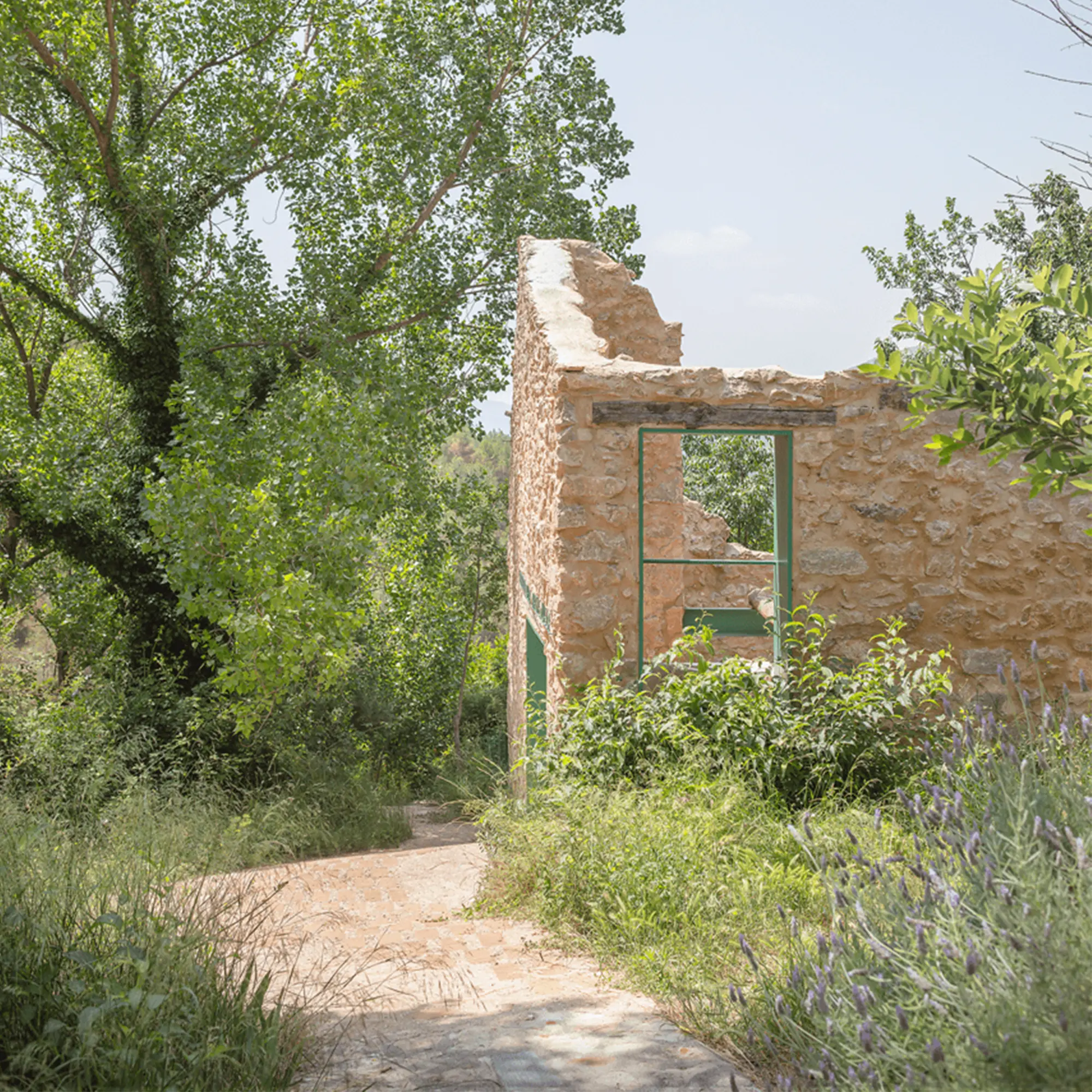
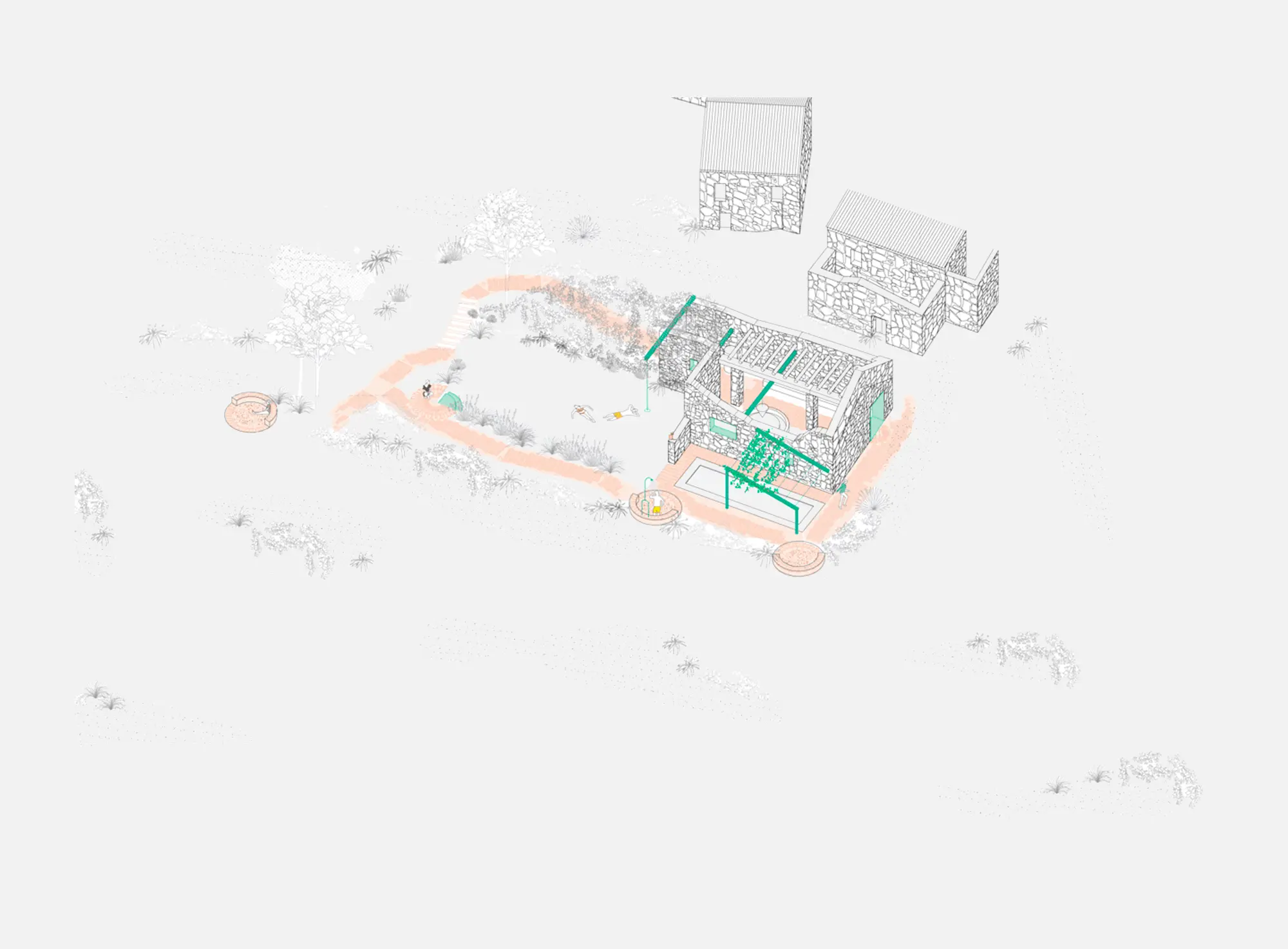
The path to the former olive oil mill is set within the natural surroundings of a former olive mill in ruins in La Artejuela, a hamlet belonging to the municipality of Arañuel, in the Alto Mijares region of Castellón, Spain.
The intervention is based on observing how local residents already used the site and aims to improve the experience of moving through and spending time in the area without altering the existing path. The regeneration of the surroundings of the former olive mill brings together a series of spaces for gathering, resting and engaging with the landscape, integrated into the everyday life of the hamlet.
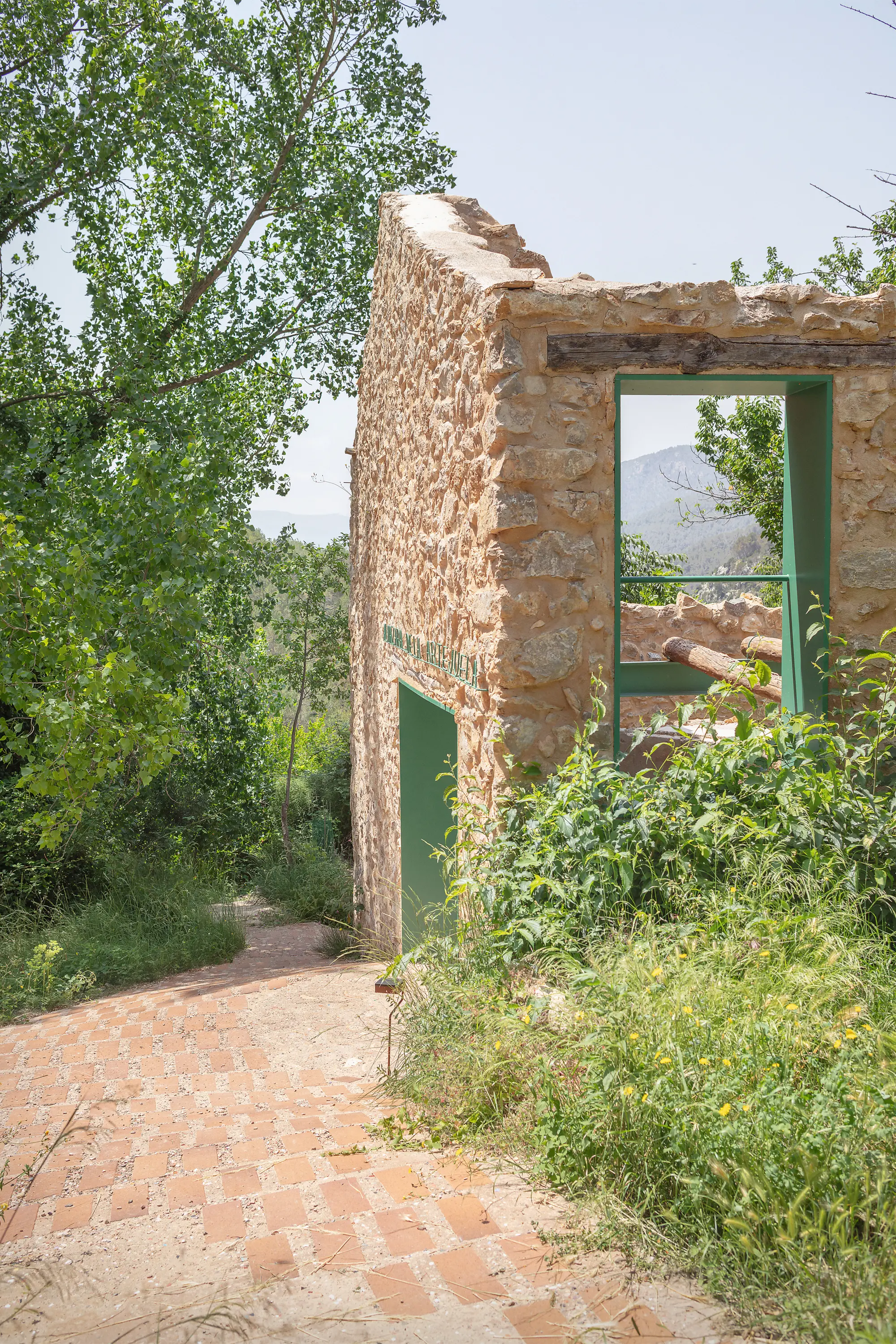
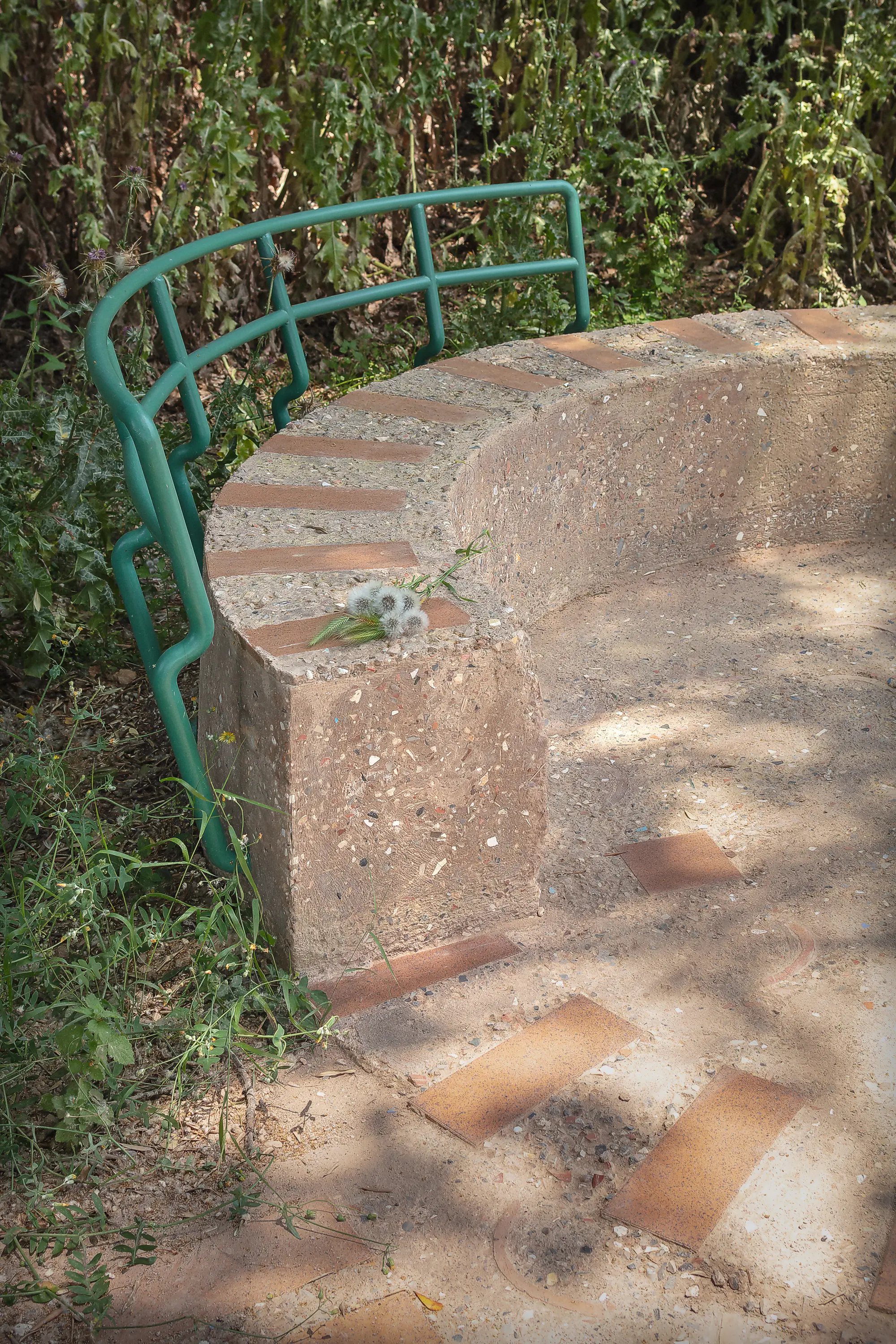
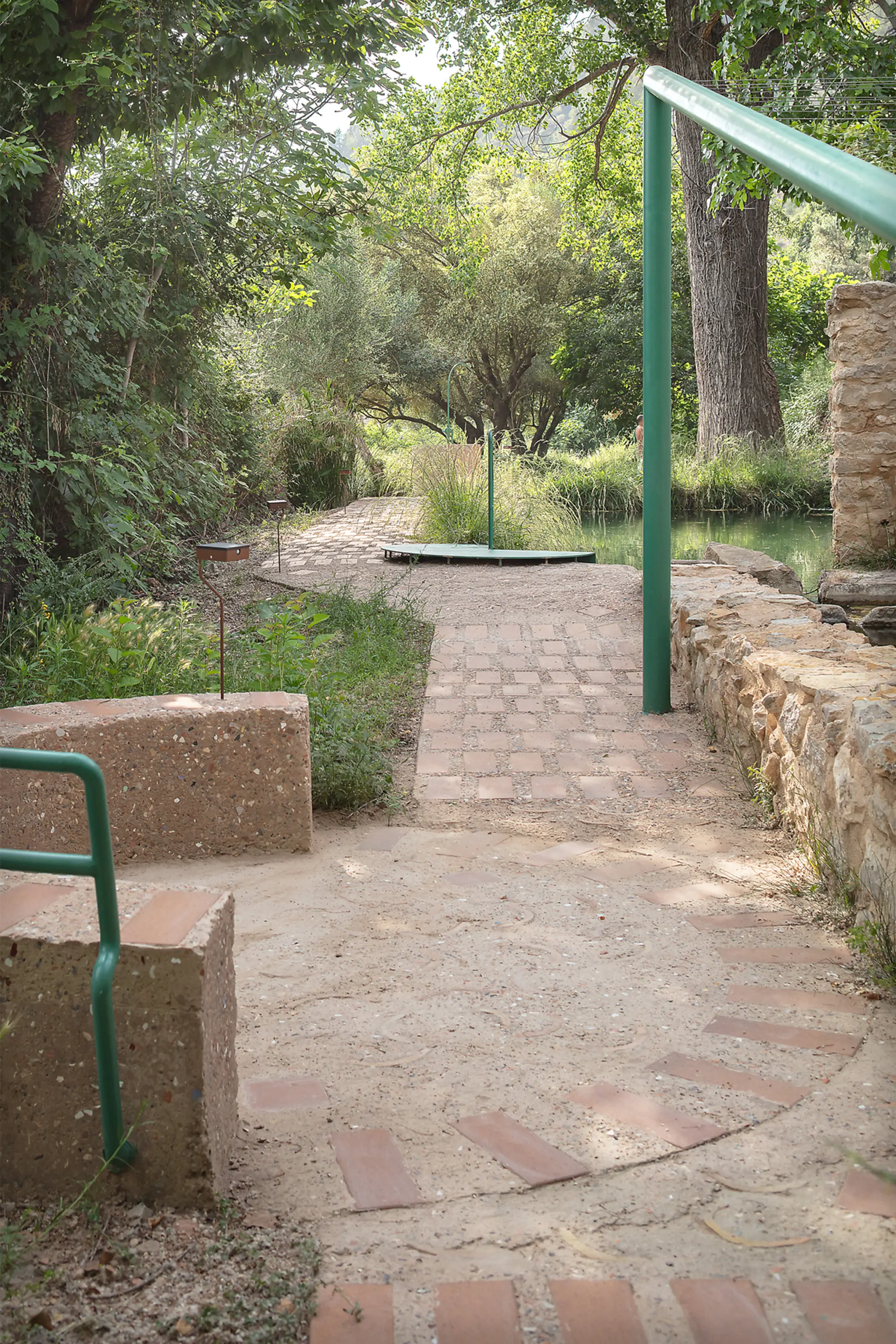
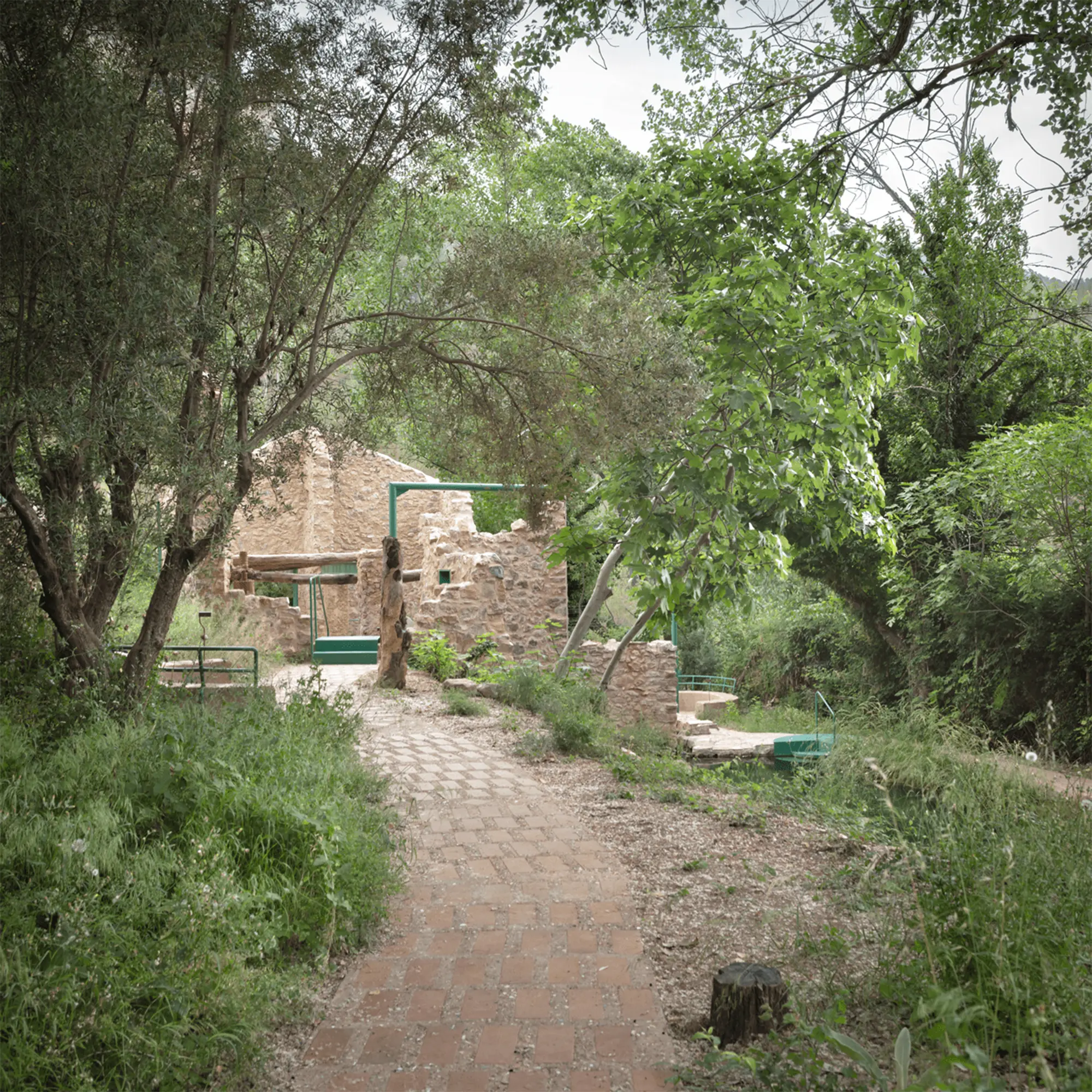
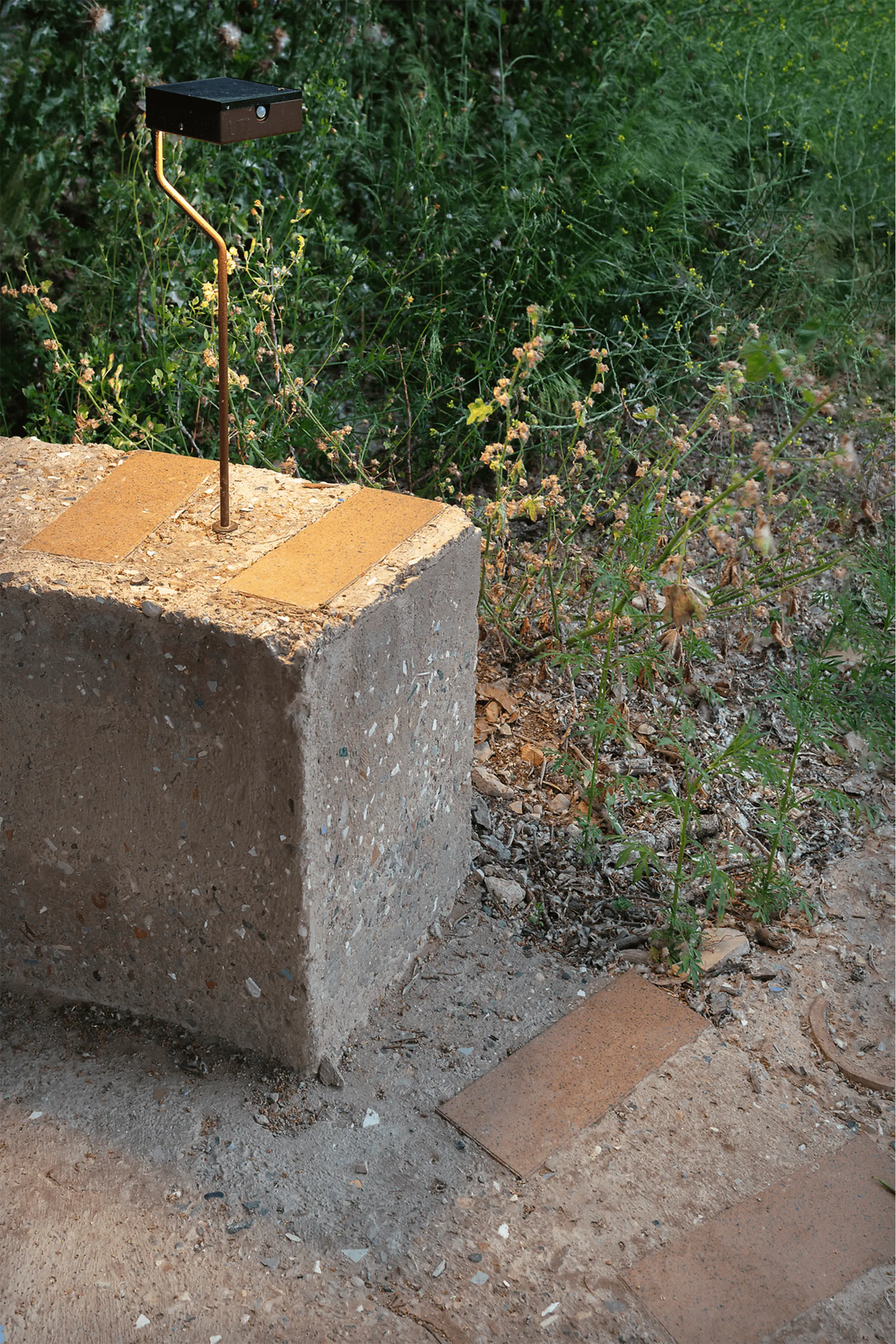
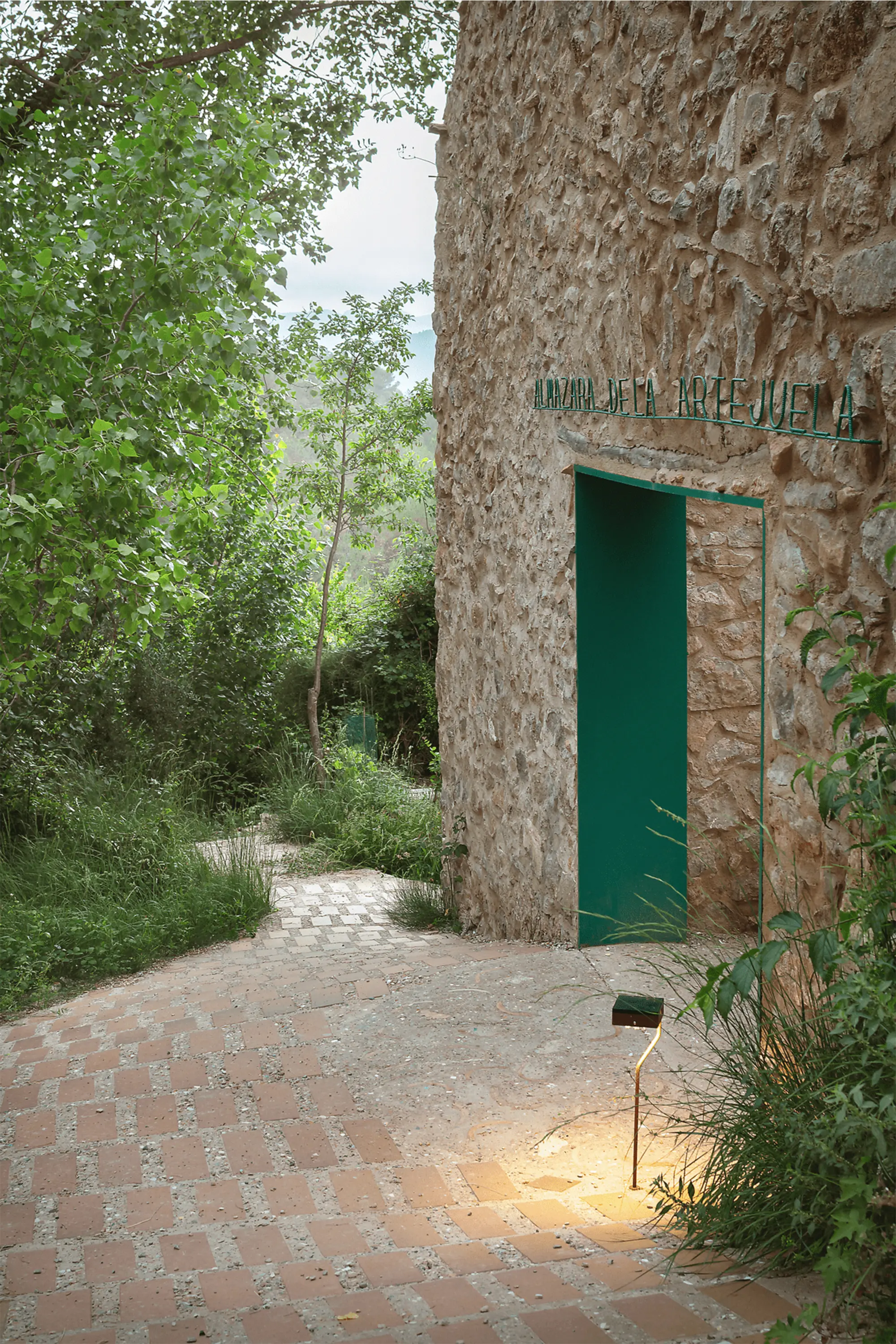
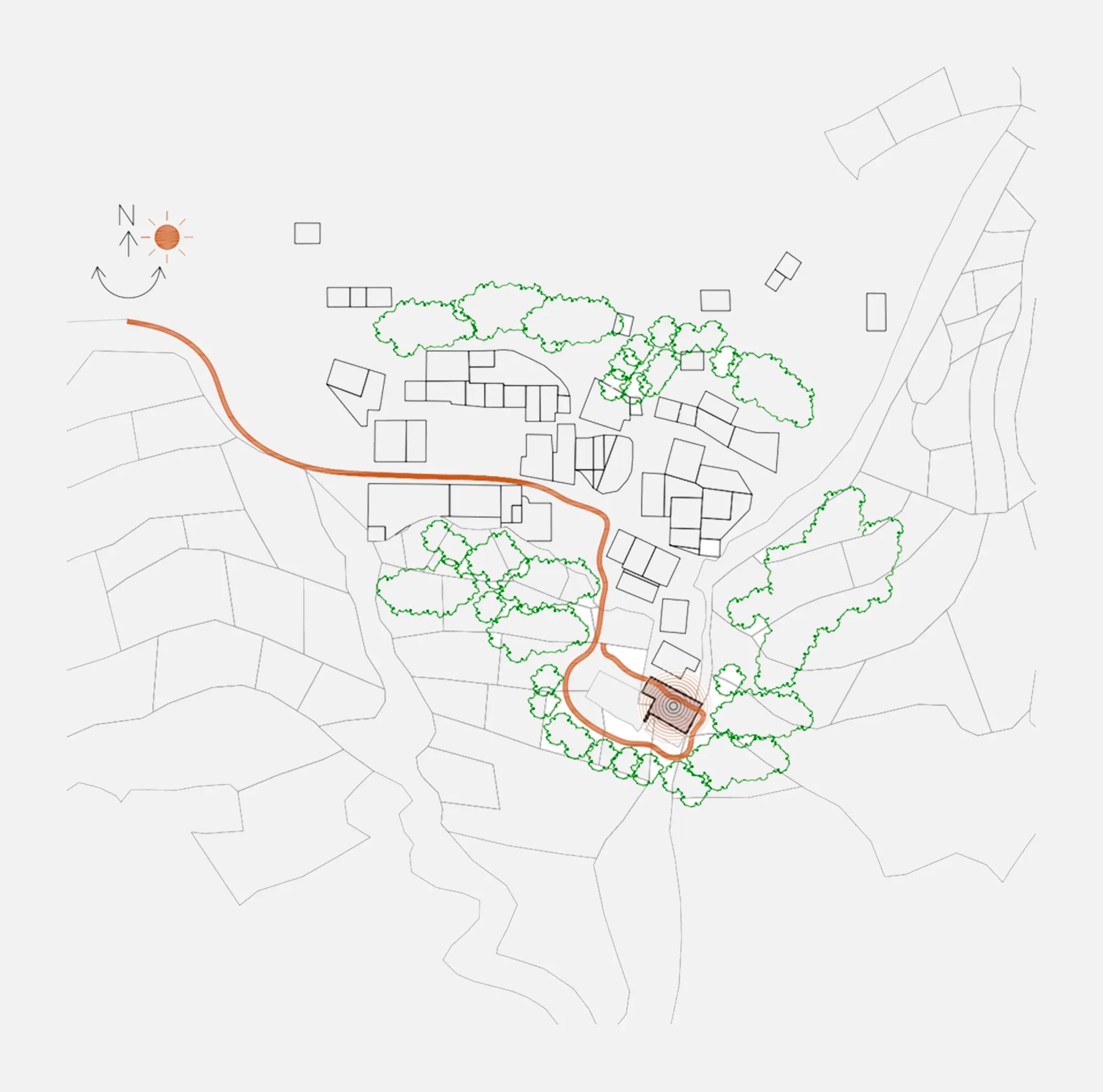
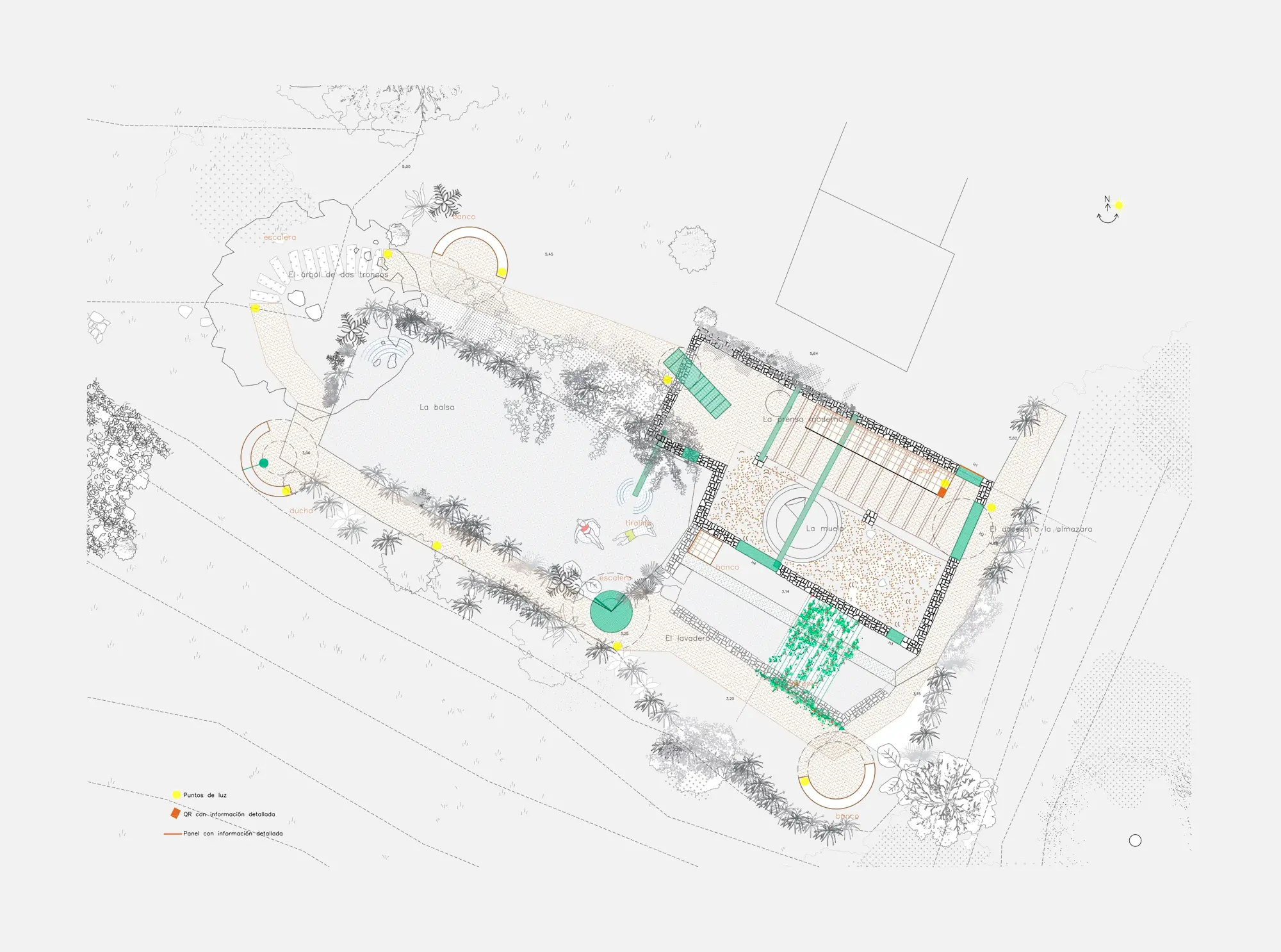
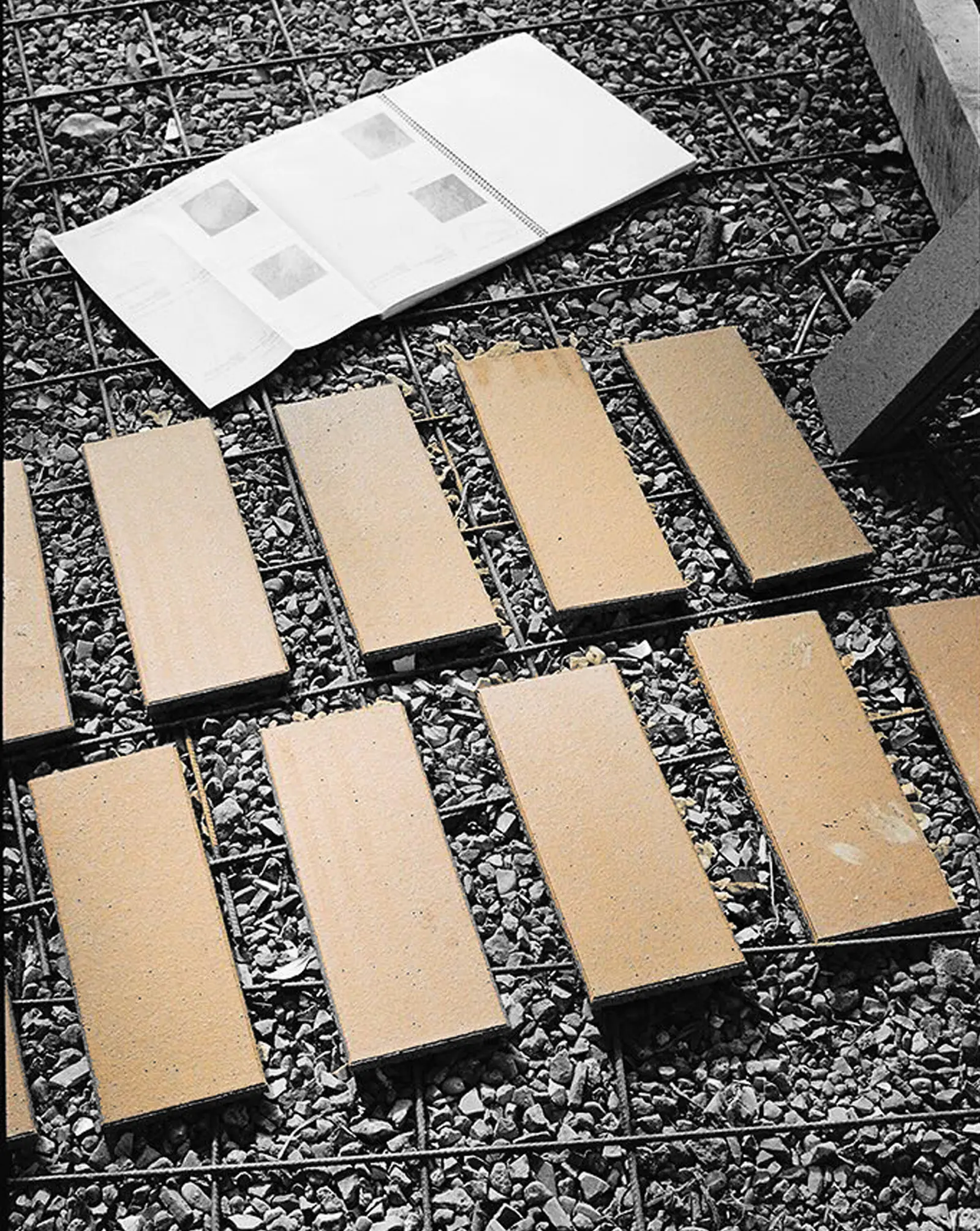
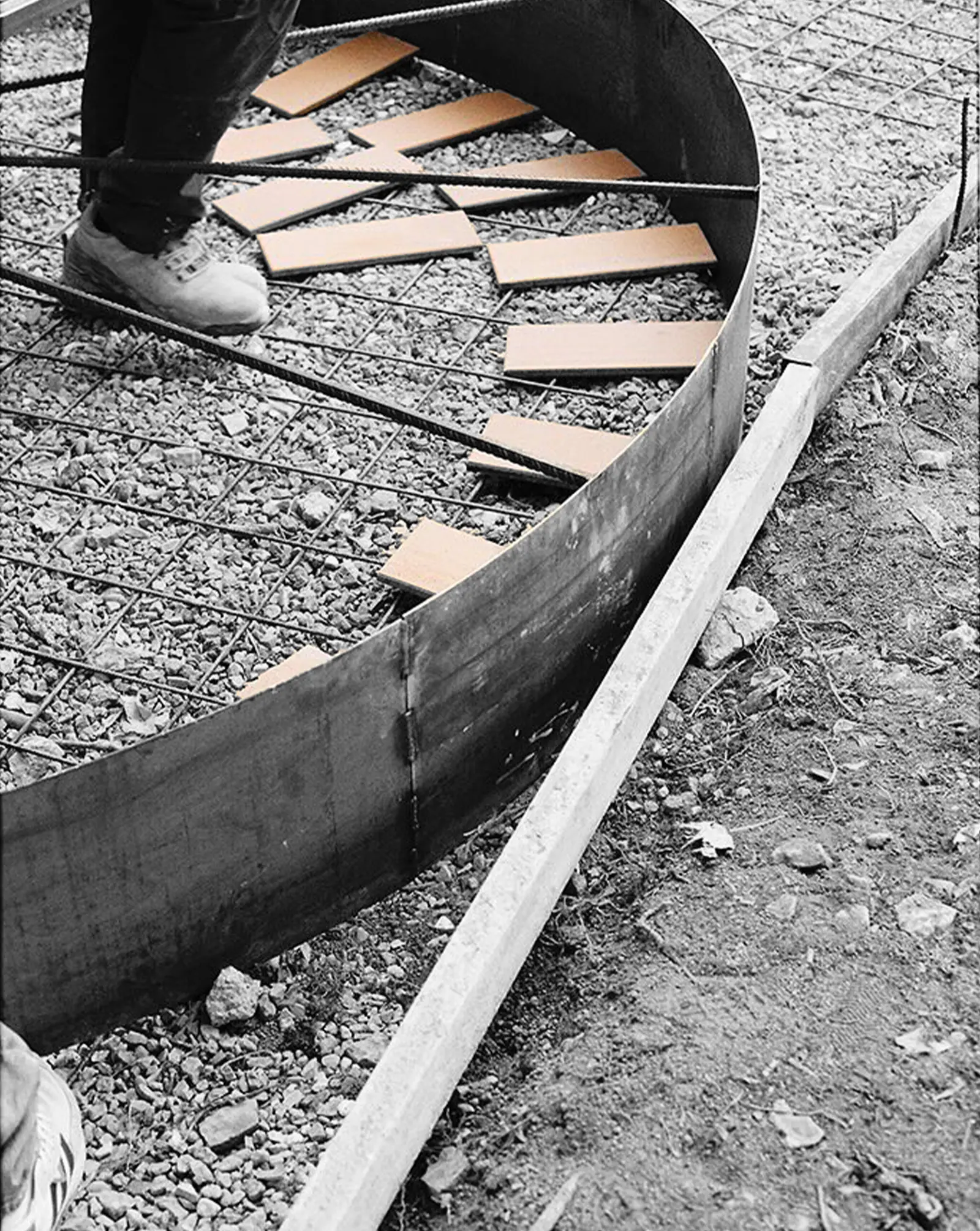
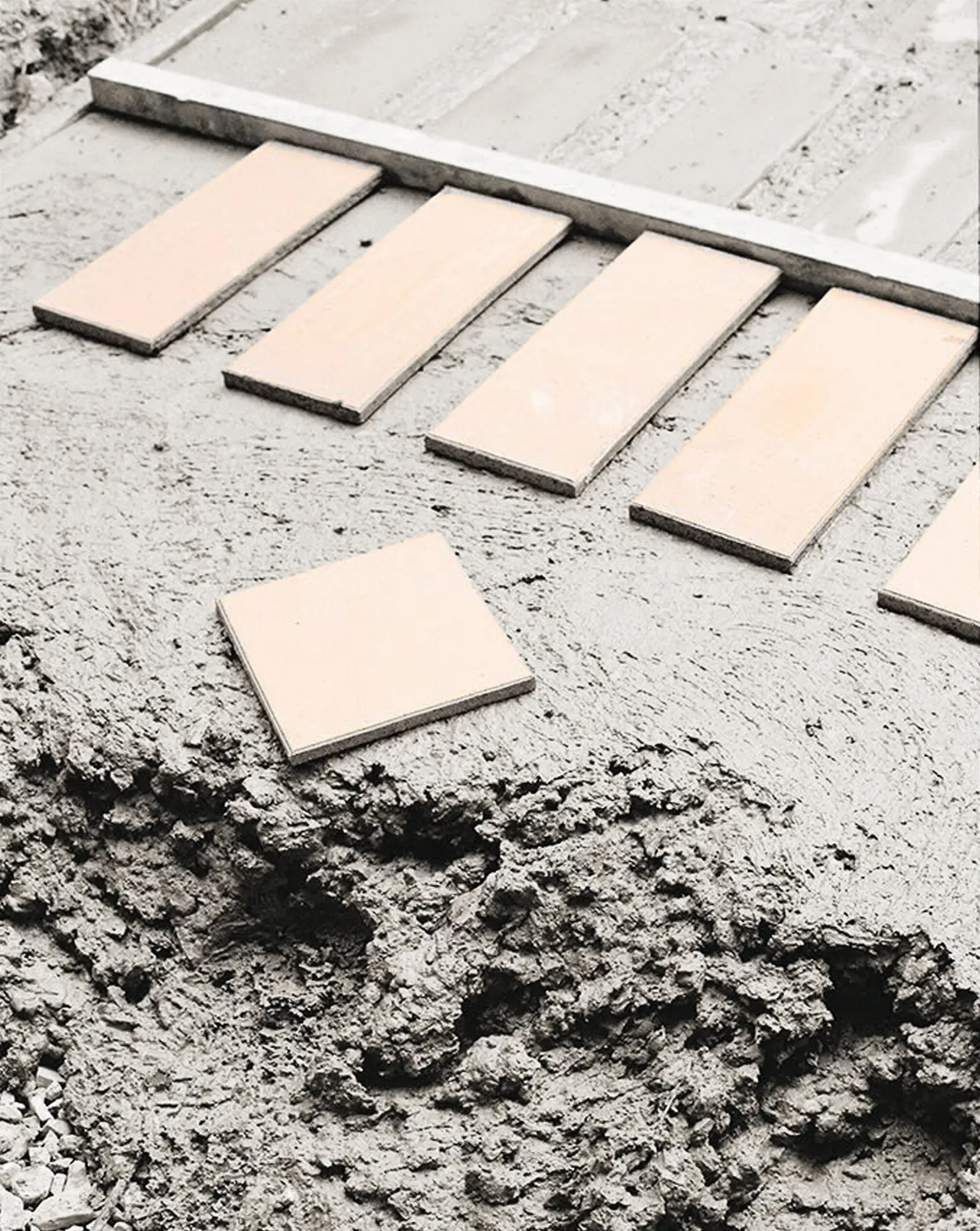
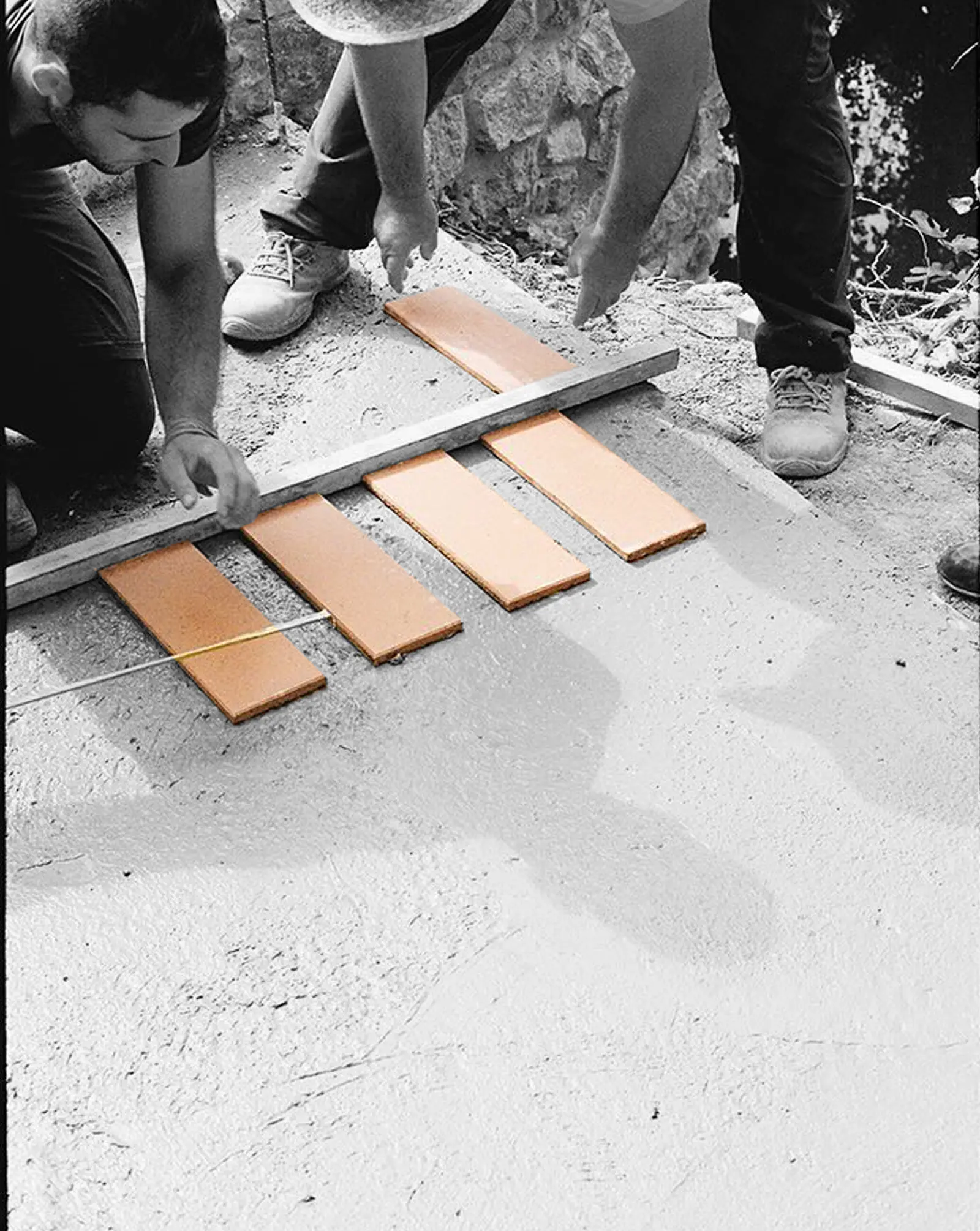
The route begins at the last houses of the village and descends between agricultural terraces towards the former olive mill. A continuous surface of exposed-aggregate concrete, conceived as an in-situ terrazzo made from rubble recovered from the collapsed structure and different patterns of ceramic paving, guides the path and connects the various elements of the intervention.
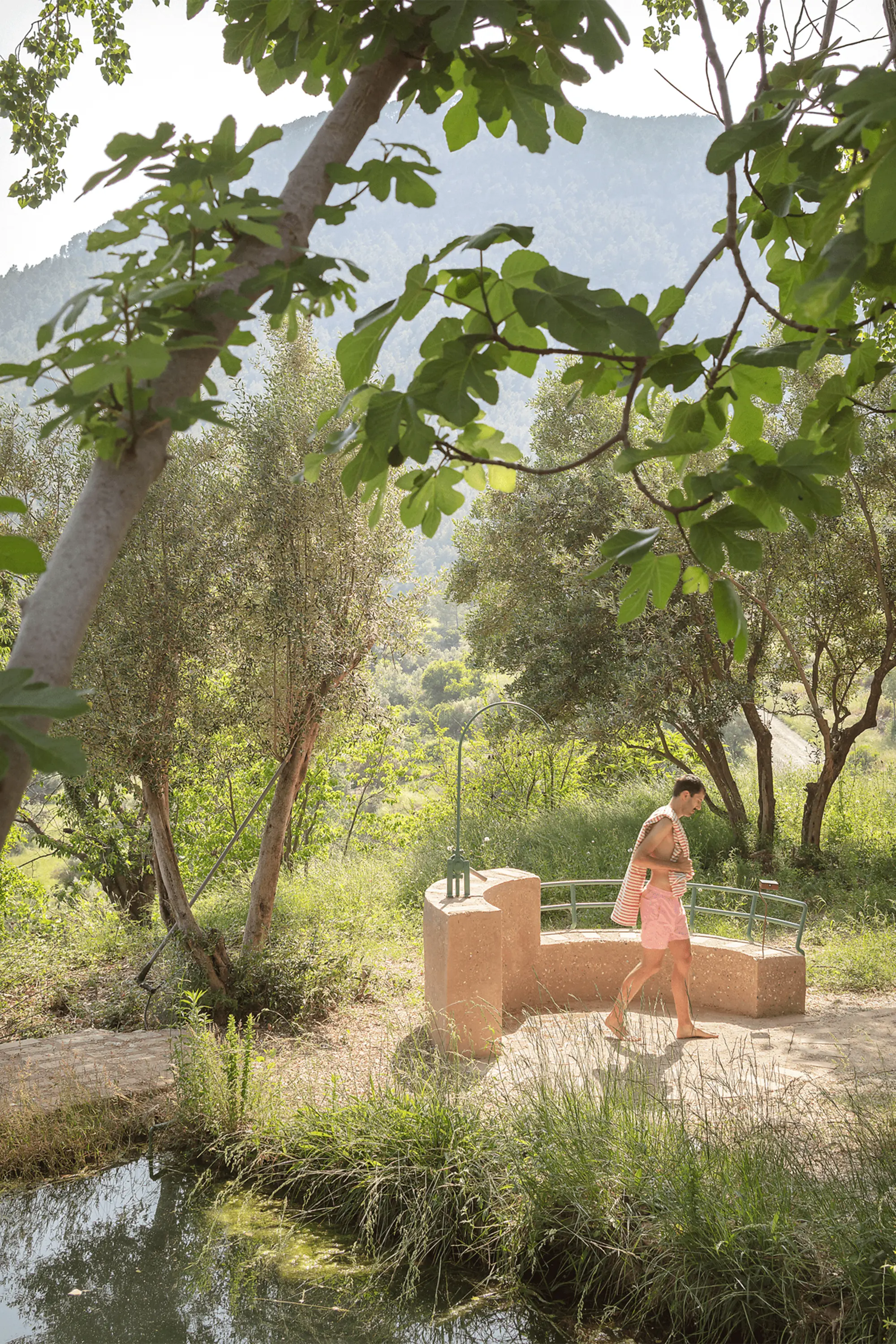
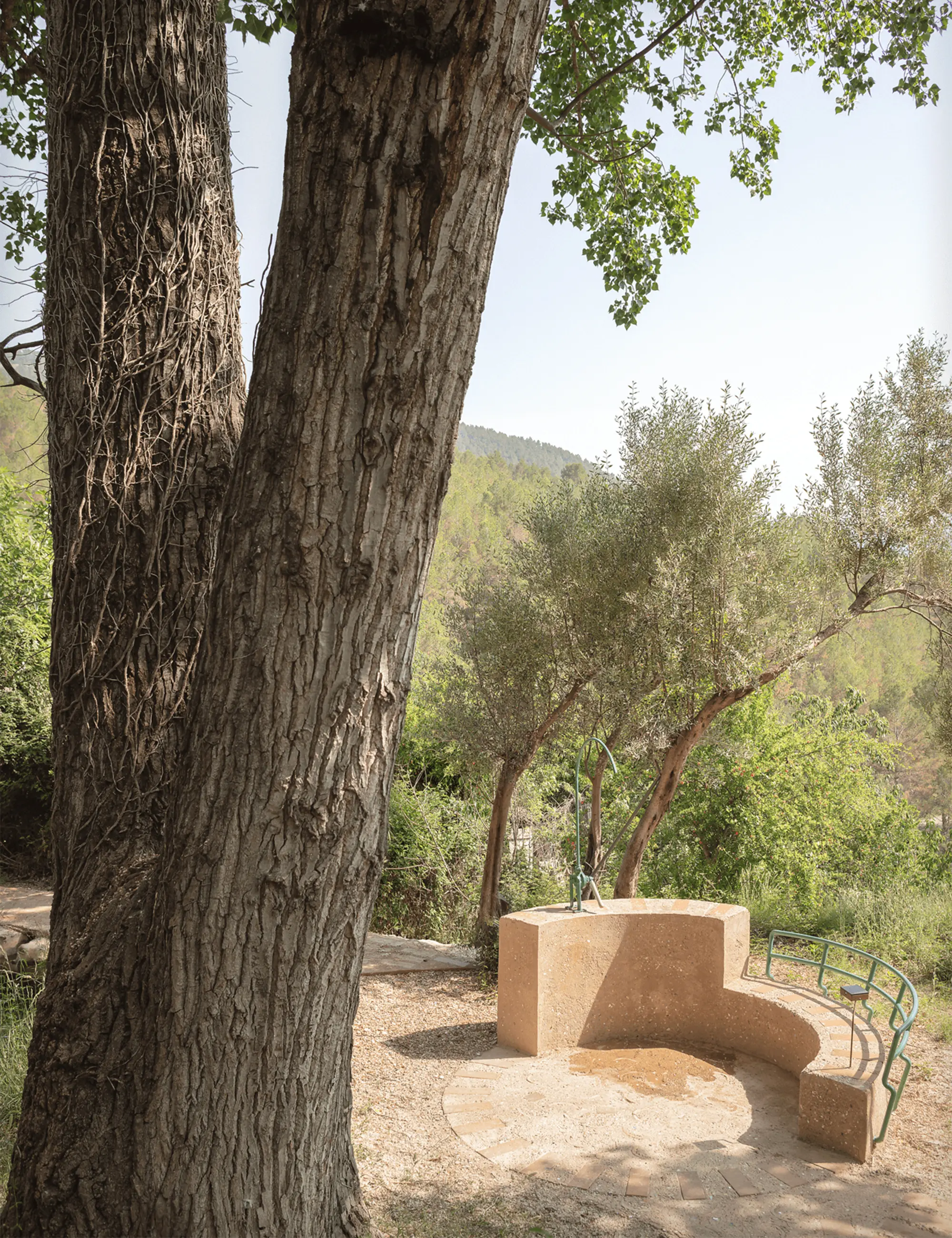
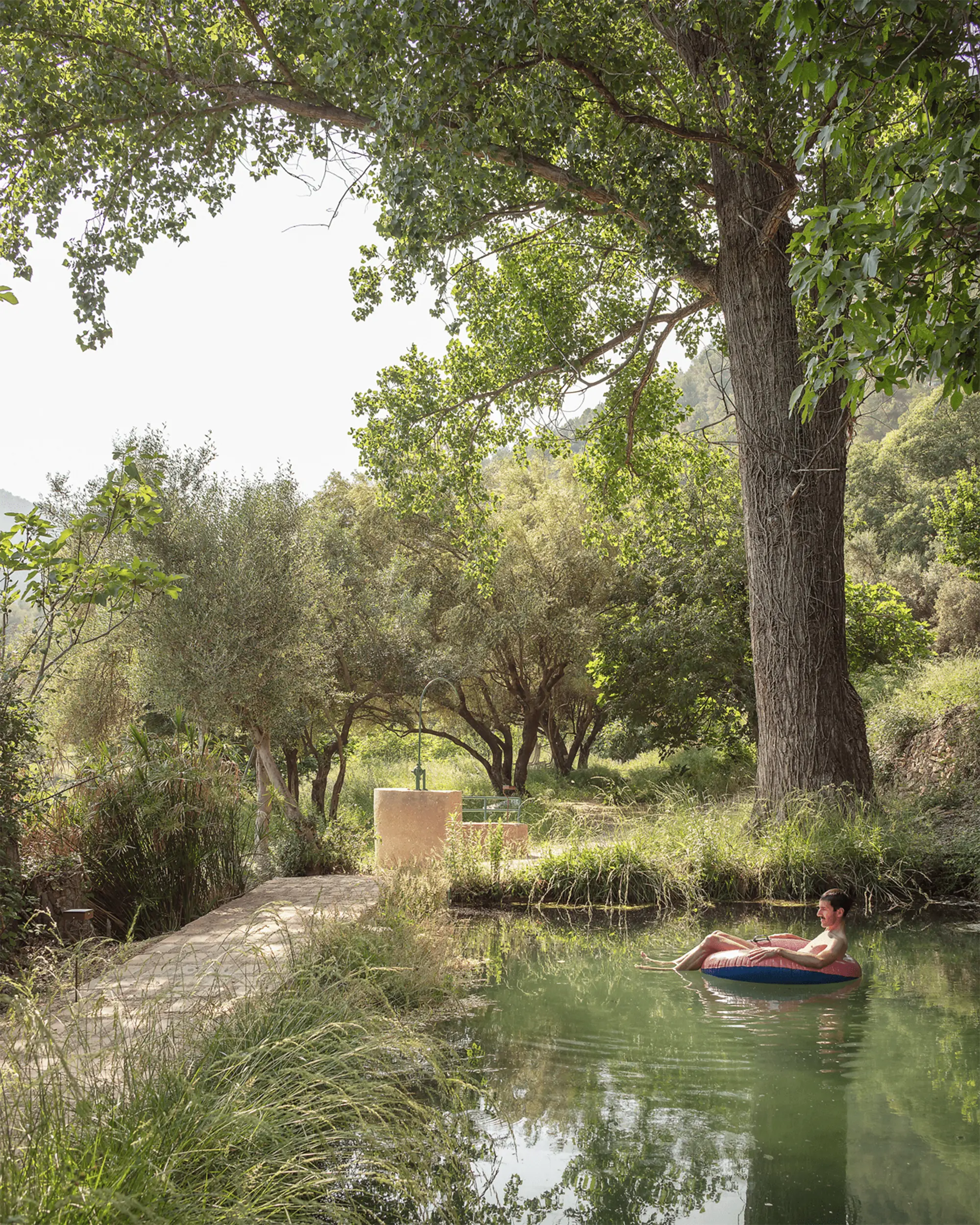
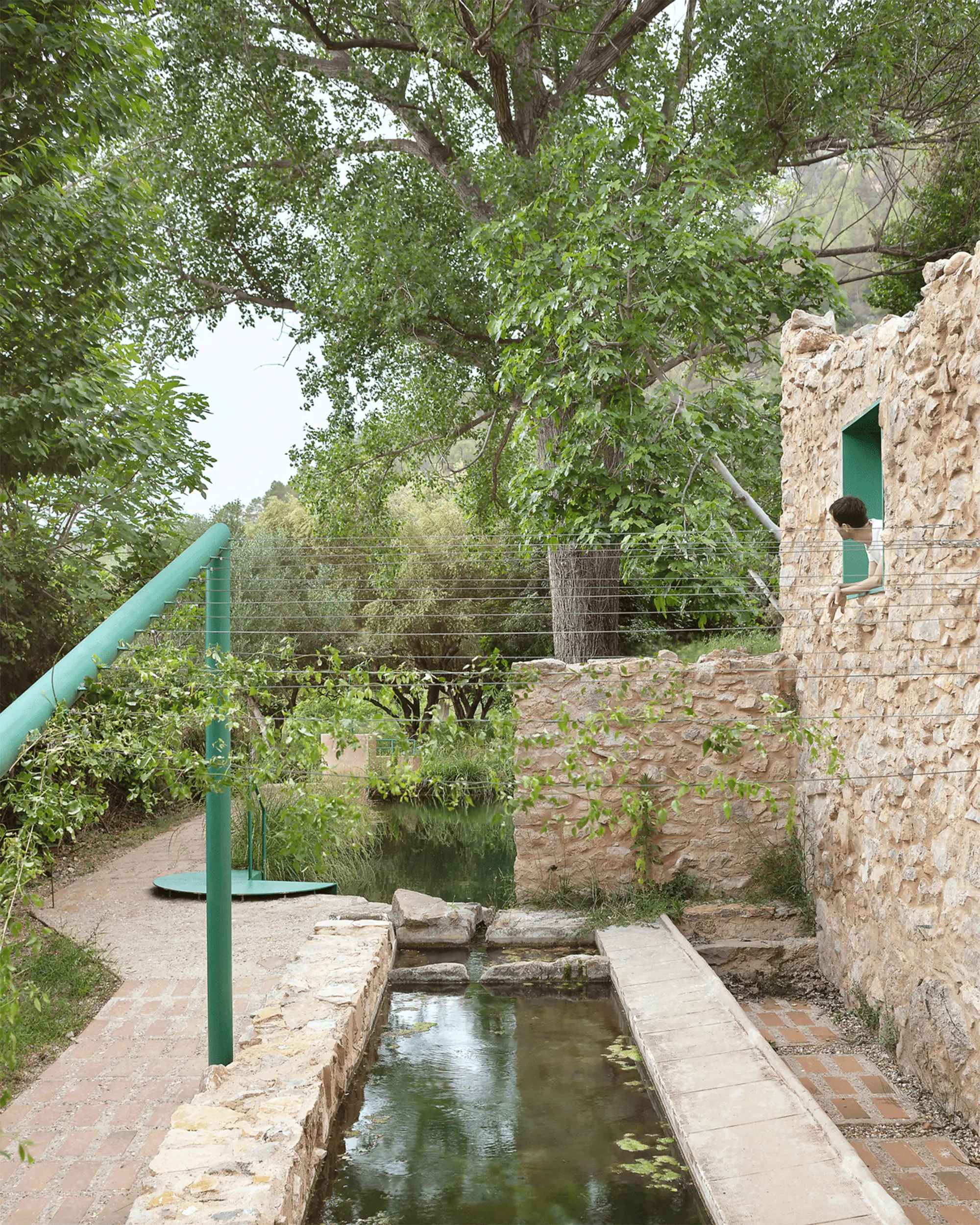
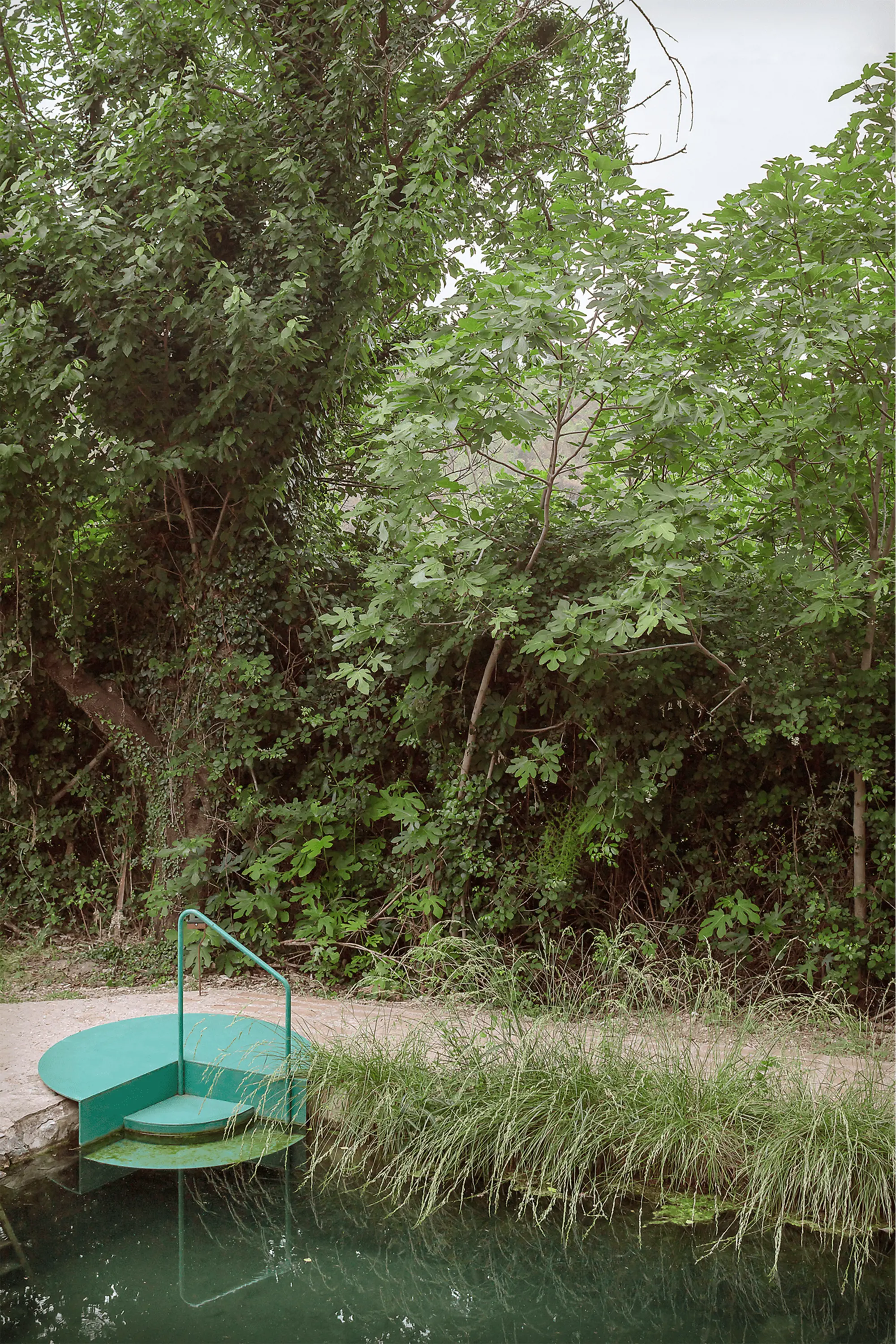
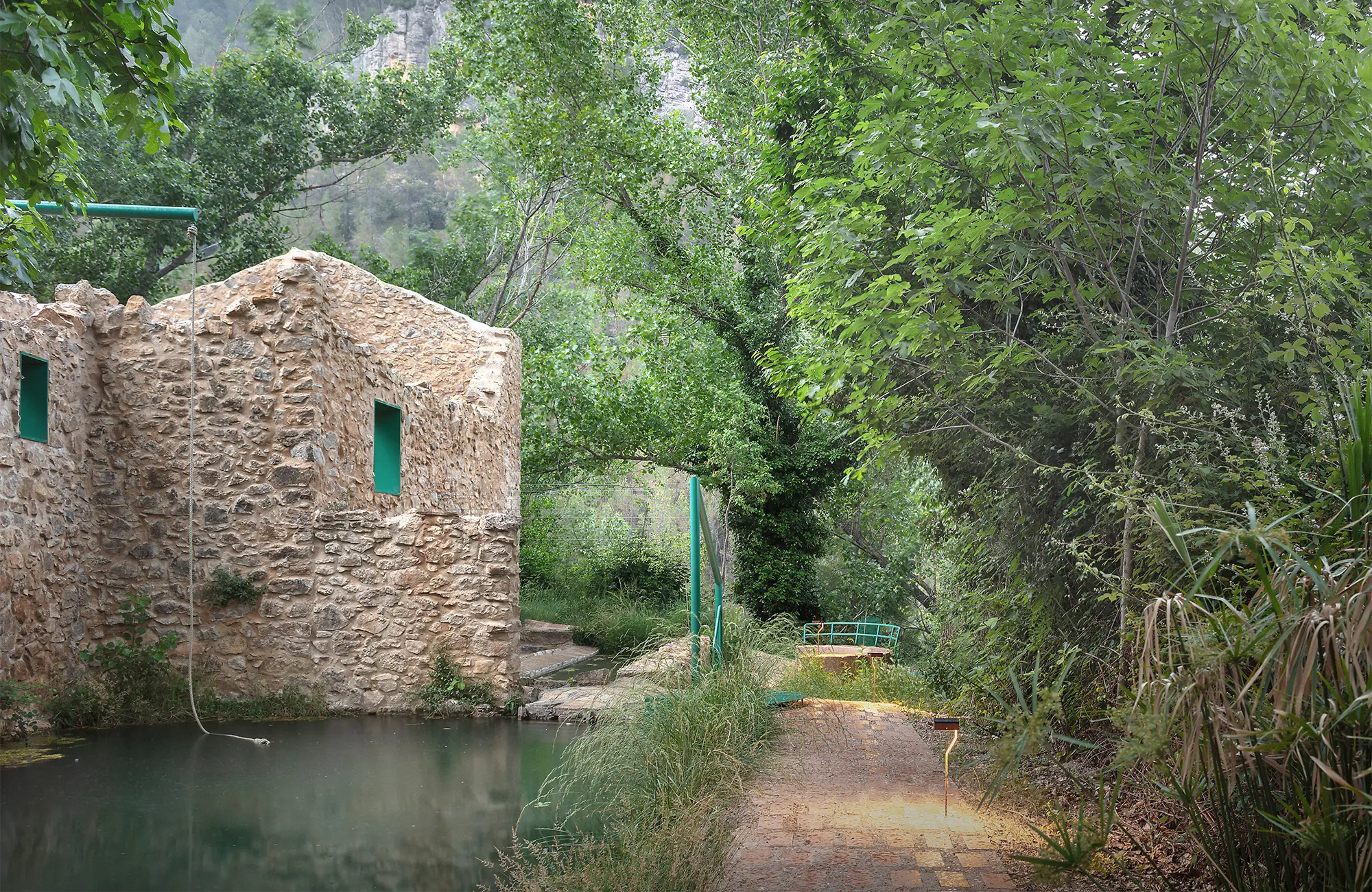
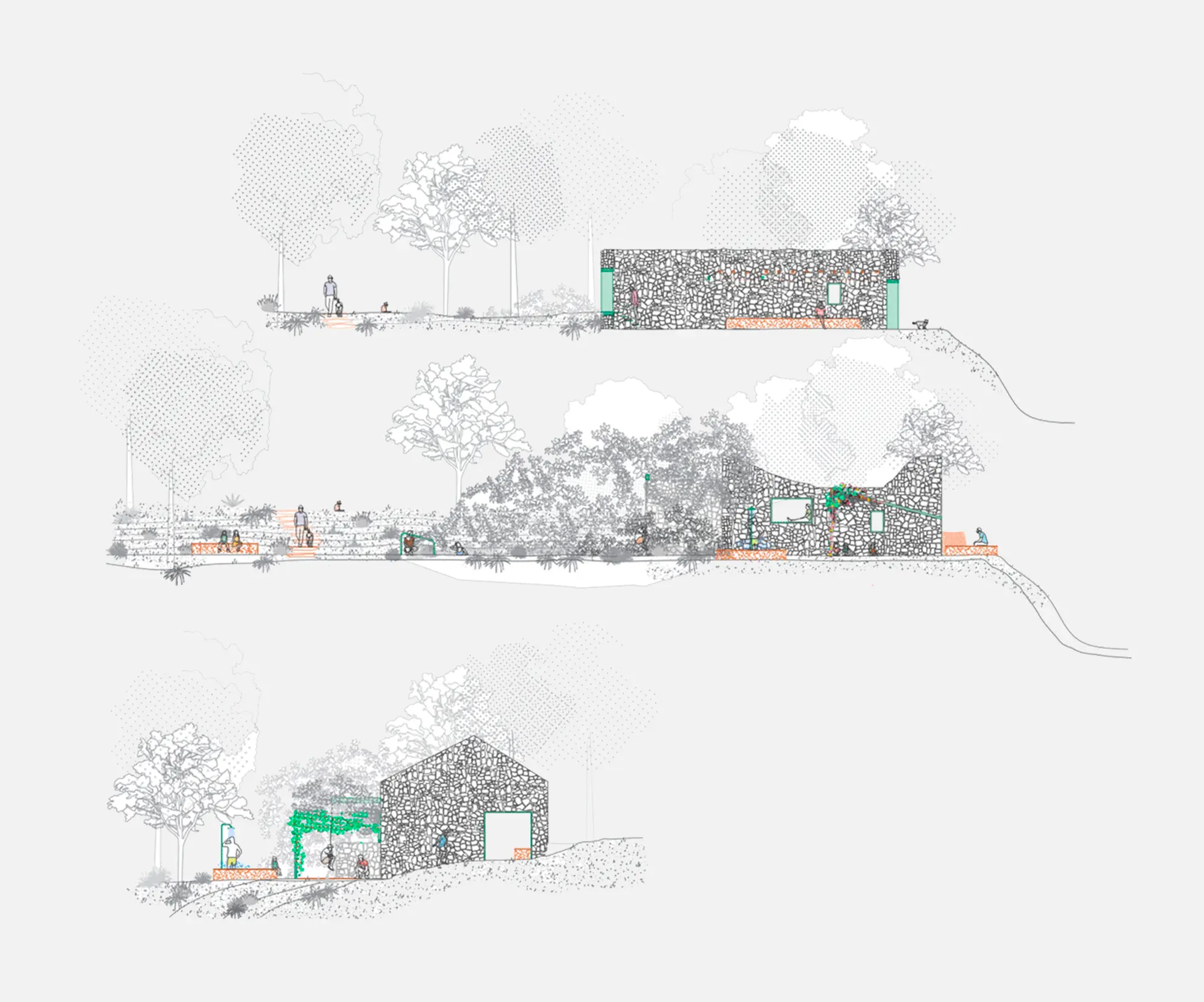
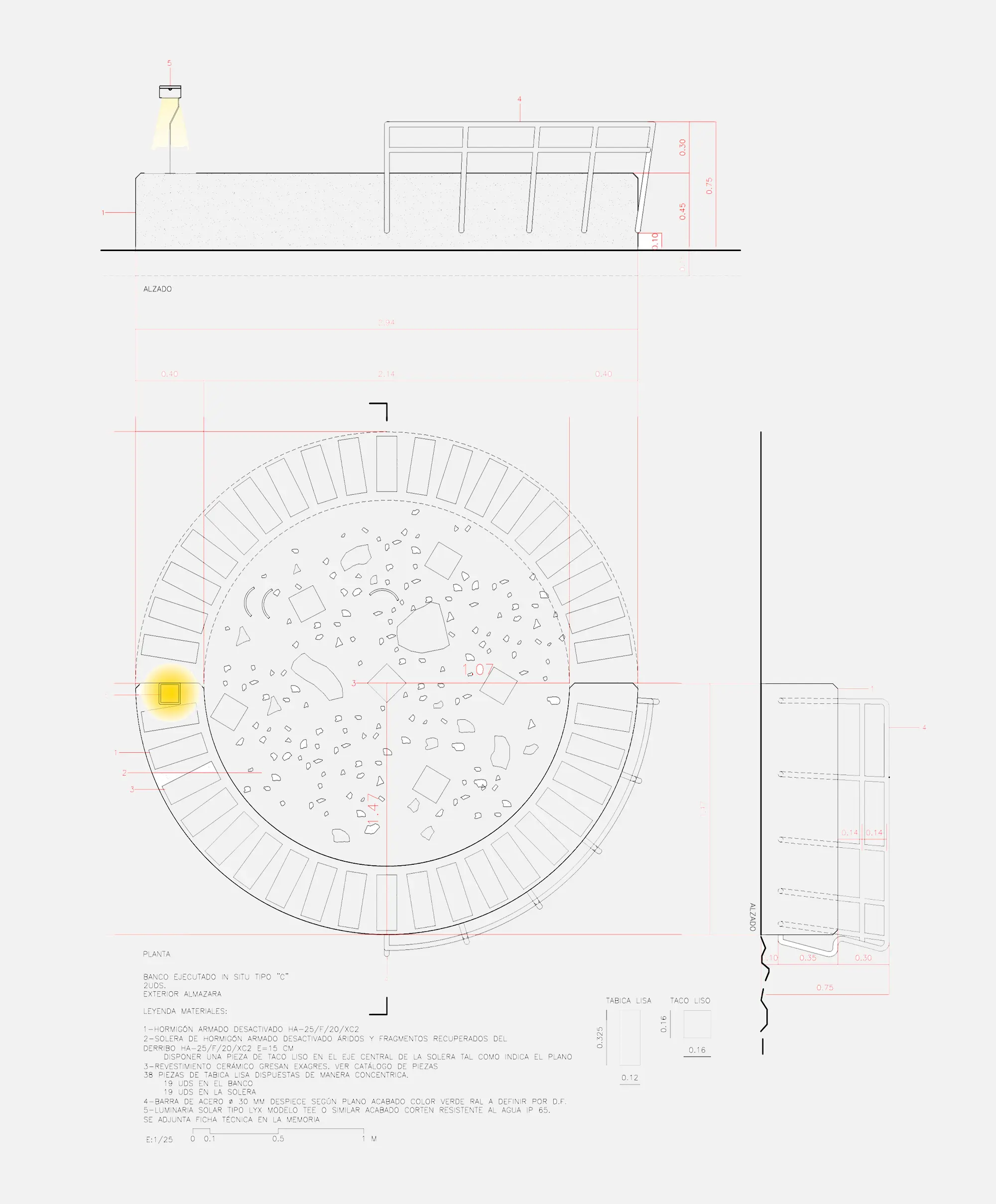
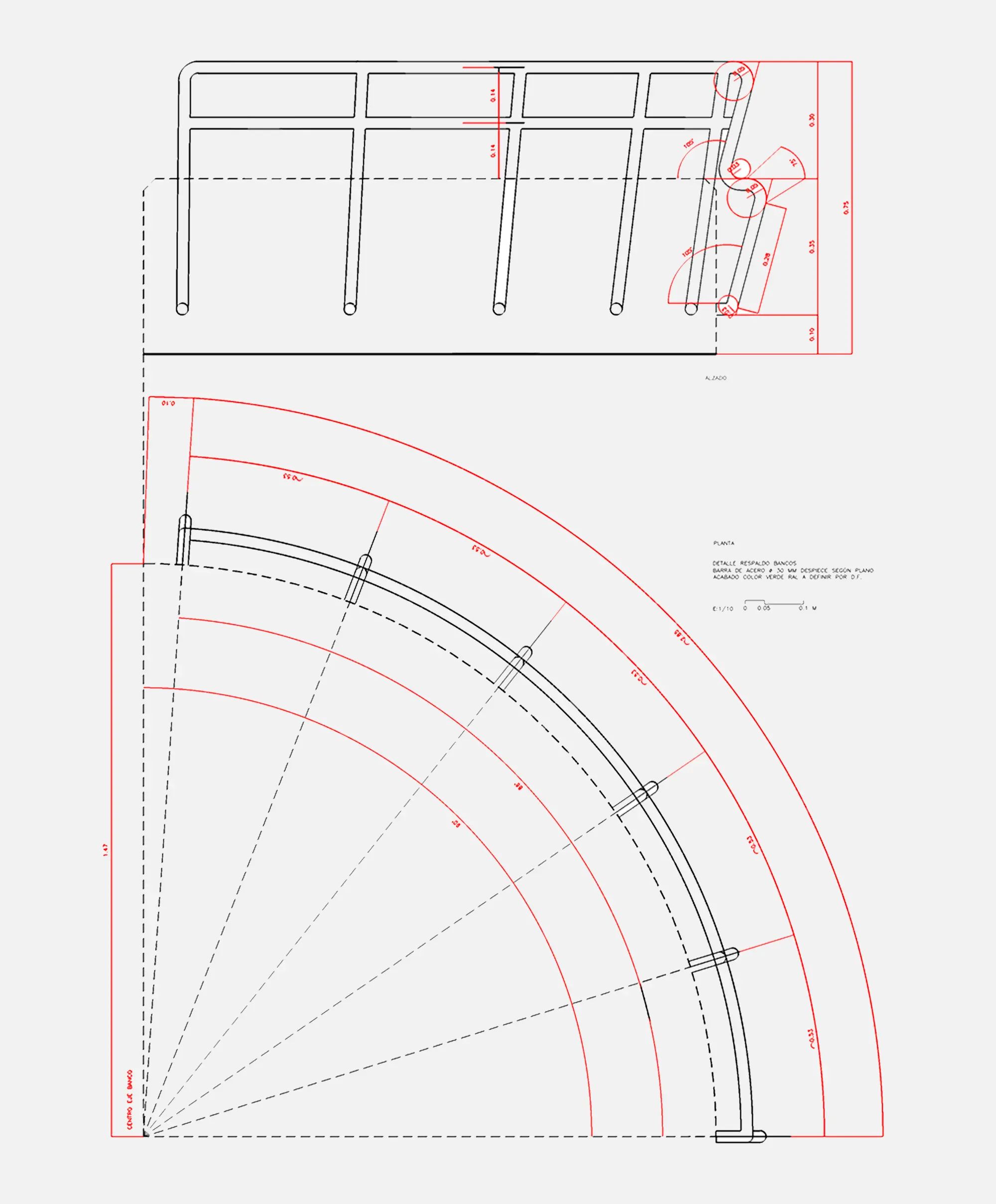
Among the olive trees, a viewing bench reinterprets the informal arrangement of chairs that residents had placed in the spots best suited to resting and enjoying the views. A spout extending from the bench supplies water pumped from the pool, creating a place to shower during the warmer months. Further along, beside the pool, a circular metal element provides a new point of access to the water, designed to make its use safer and more accessible.At a change in the direction of the path, where the landscape opens up to particularly extensive views, a second resting area is introduced, with a viewing bench overlooking the ravine and the surrounding woodland. Behind it, a pergola casts shade over the former washhouse through a structure of branches, leaves and seasonal flowers. Its geometry evokes the silhouette of a now-vanished pitched roof, traces of which remain visible in the walls of the olive mill.
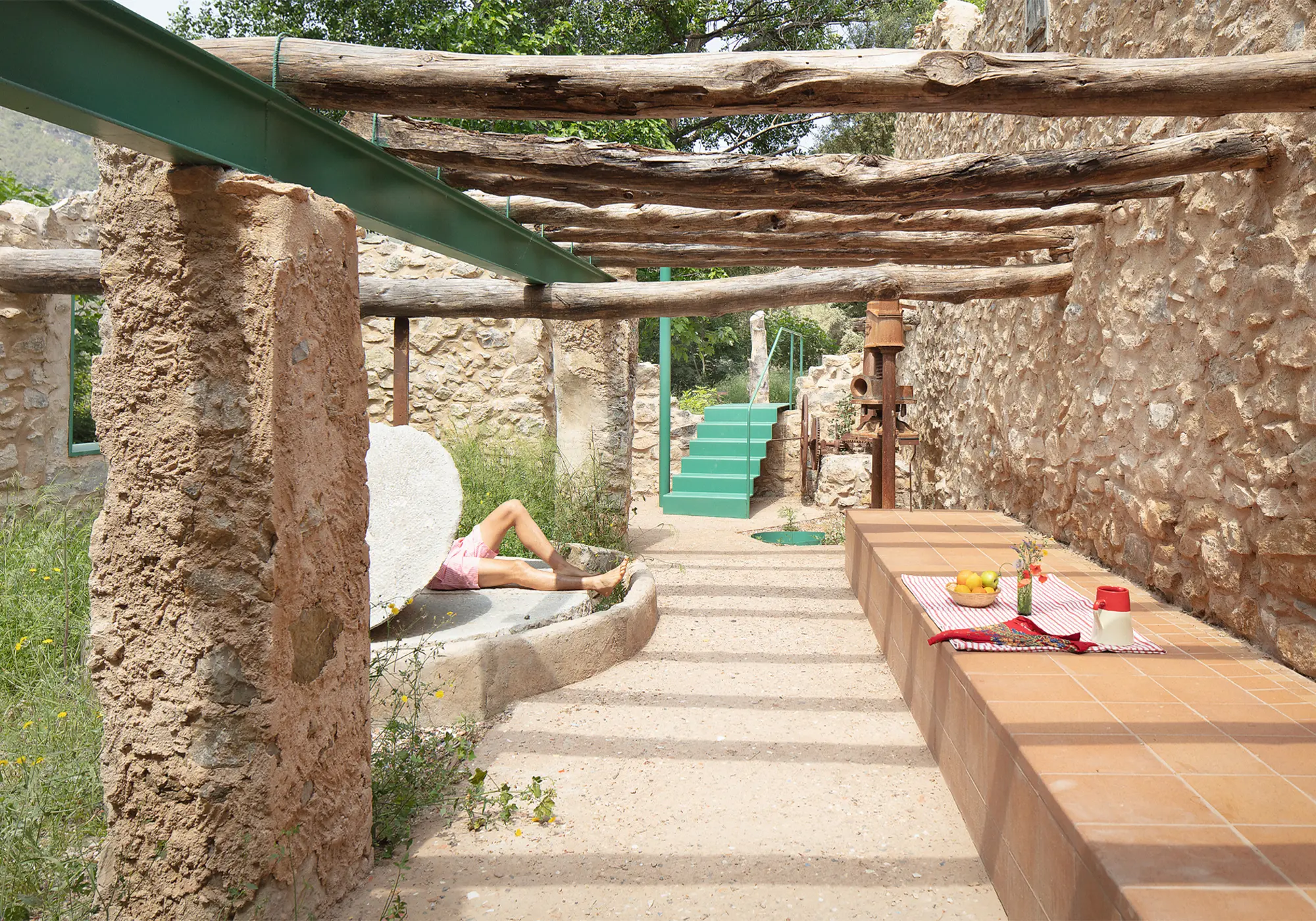
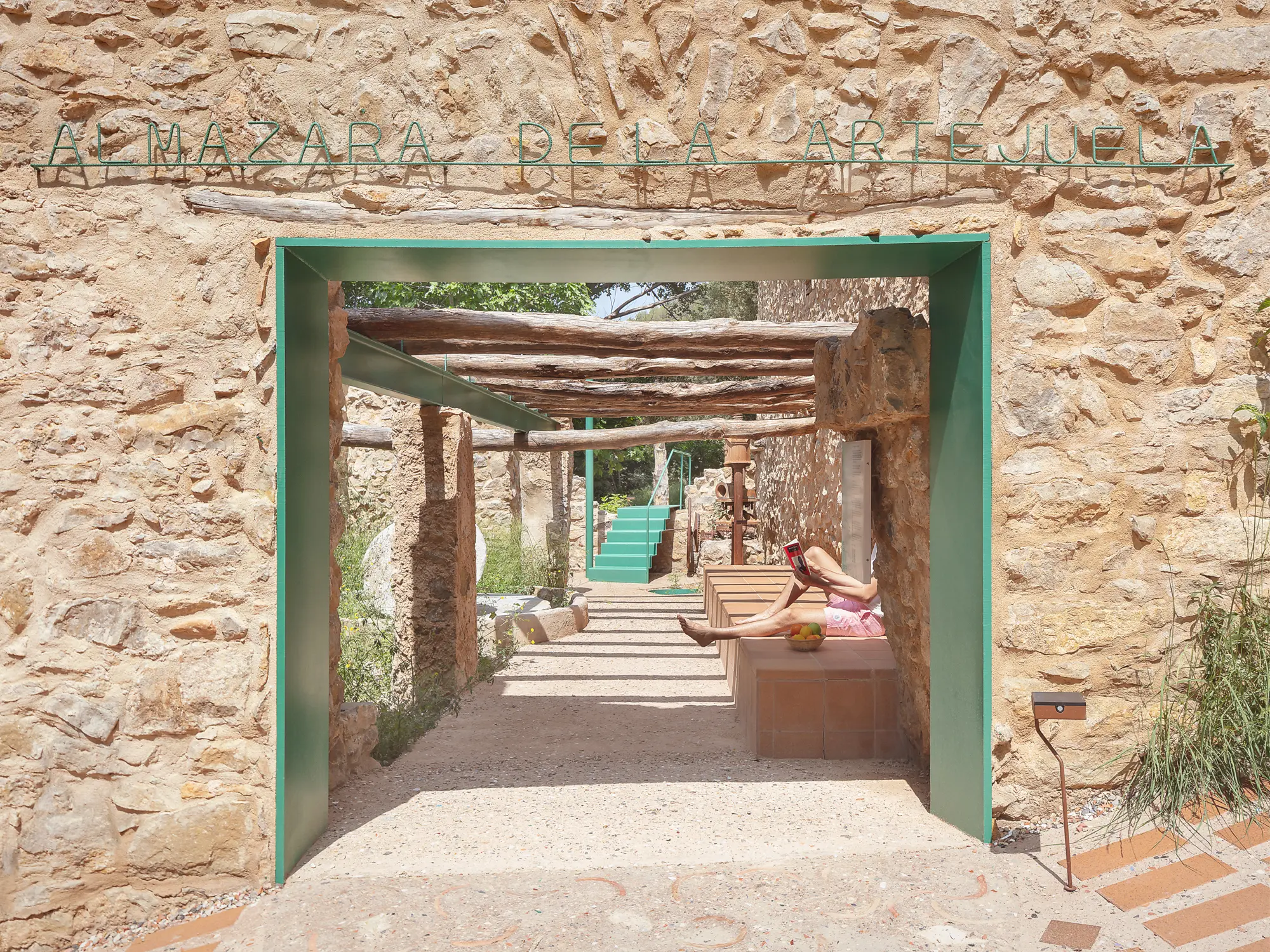
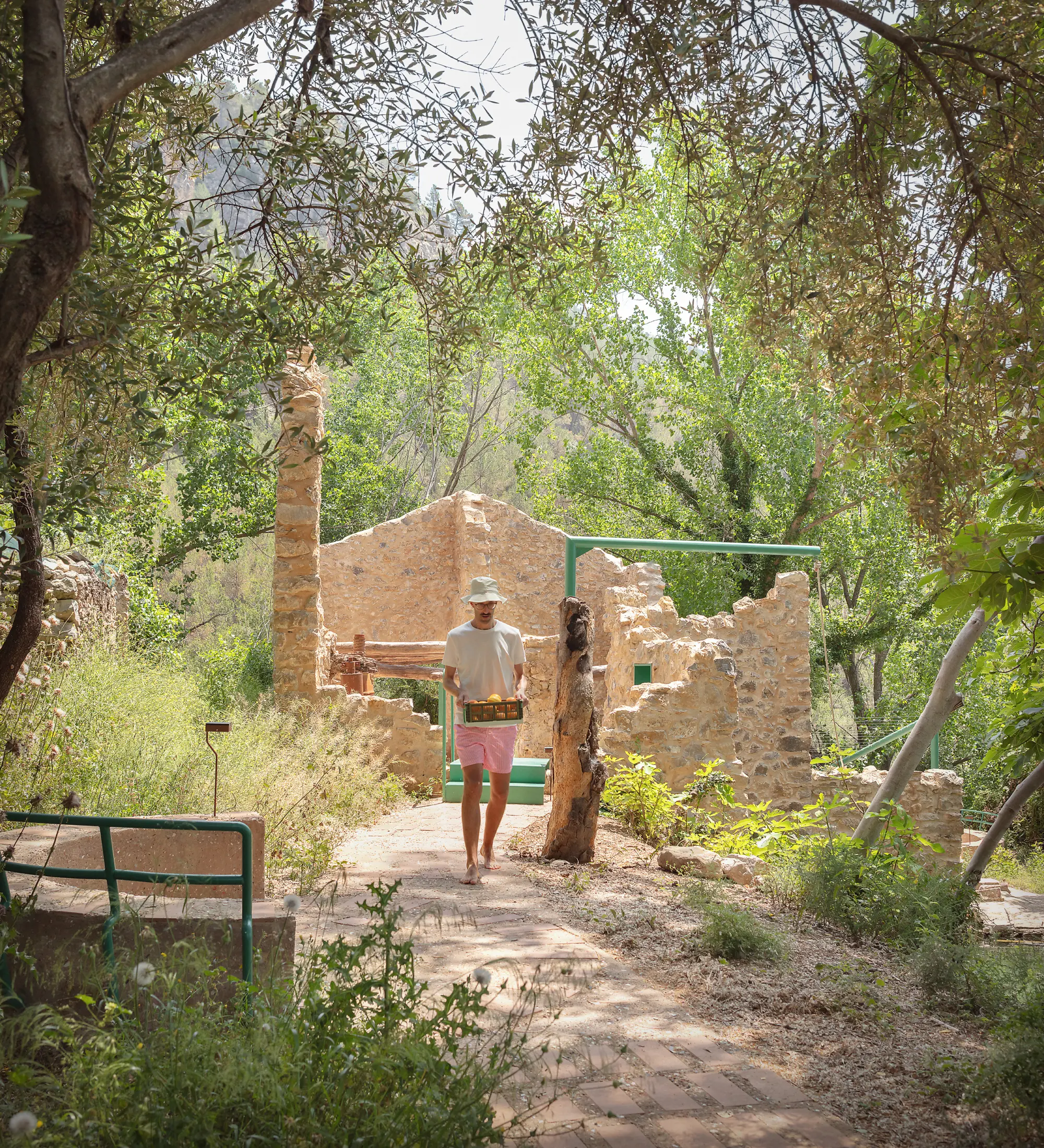
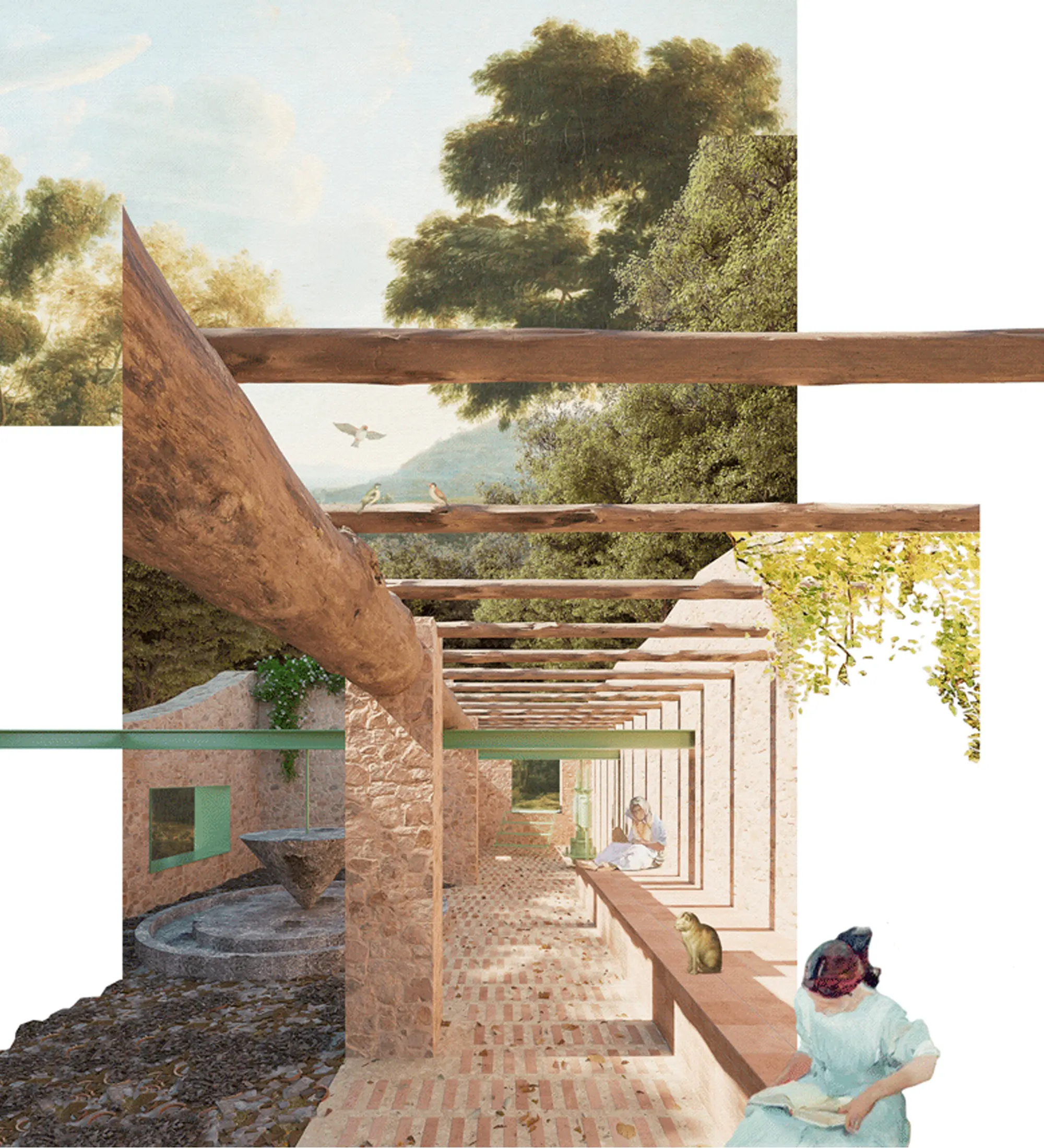
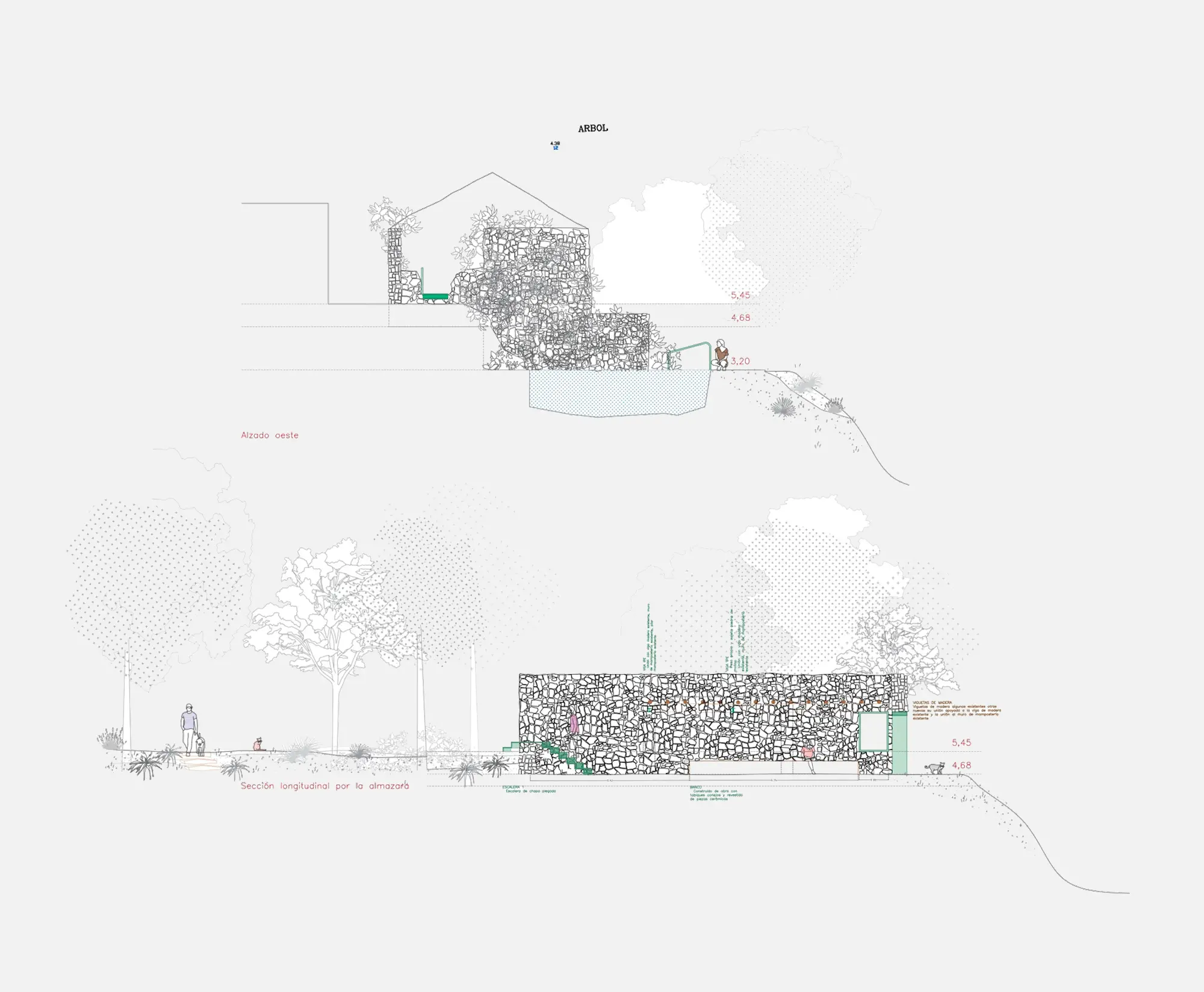
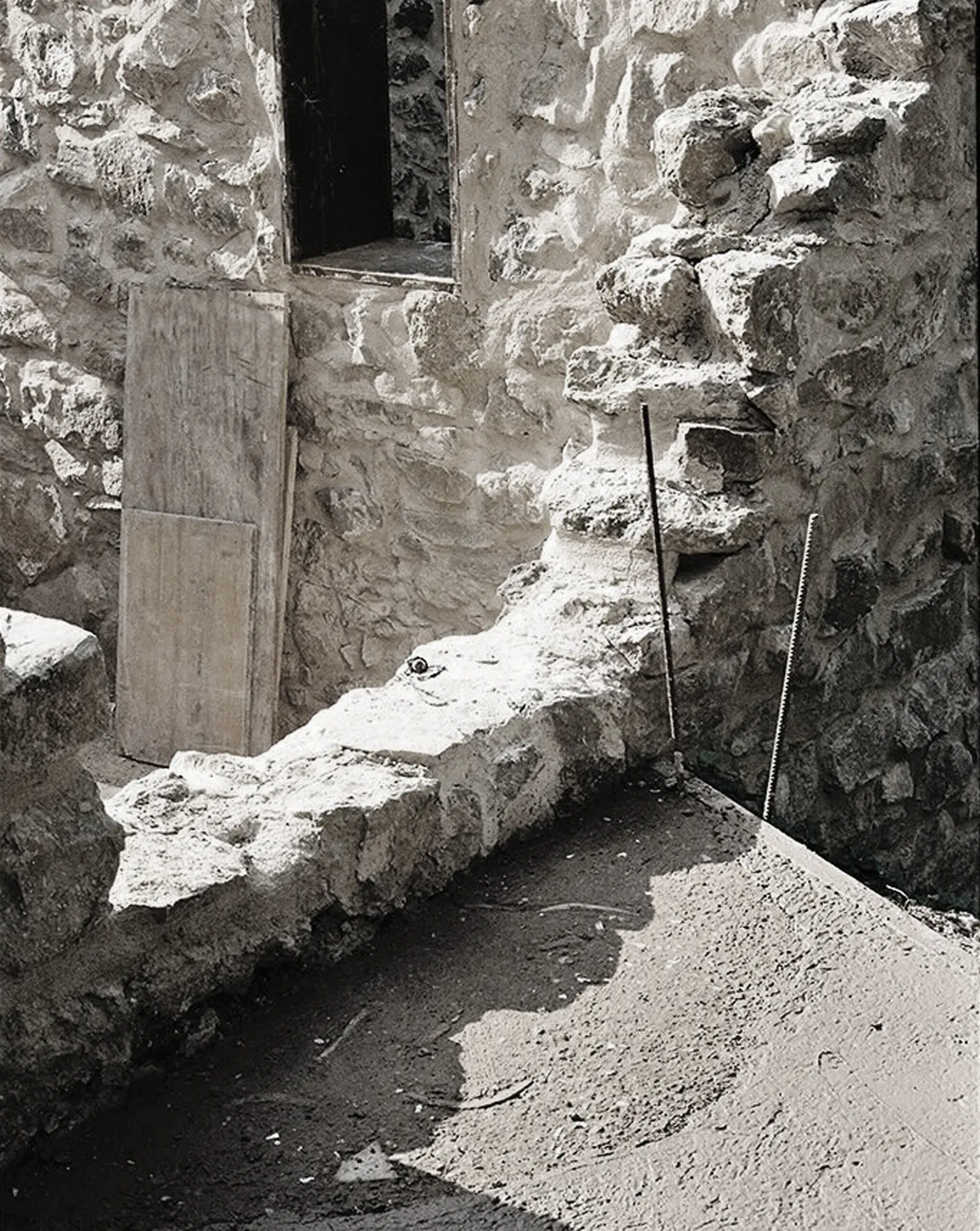
The path continues through the former olive mill, where a green metal frame, reproducing the original doorway’s jambs and lintel, marks the entrance. Inside, a semi-covered plaza takes shape as a courtyard enclosed by the building’s four façades. The intervention combines the surviving beams with new elements that evoke the former floor structure, preserving the ruin’s character.
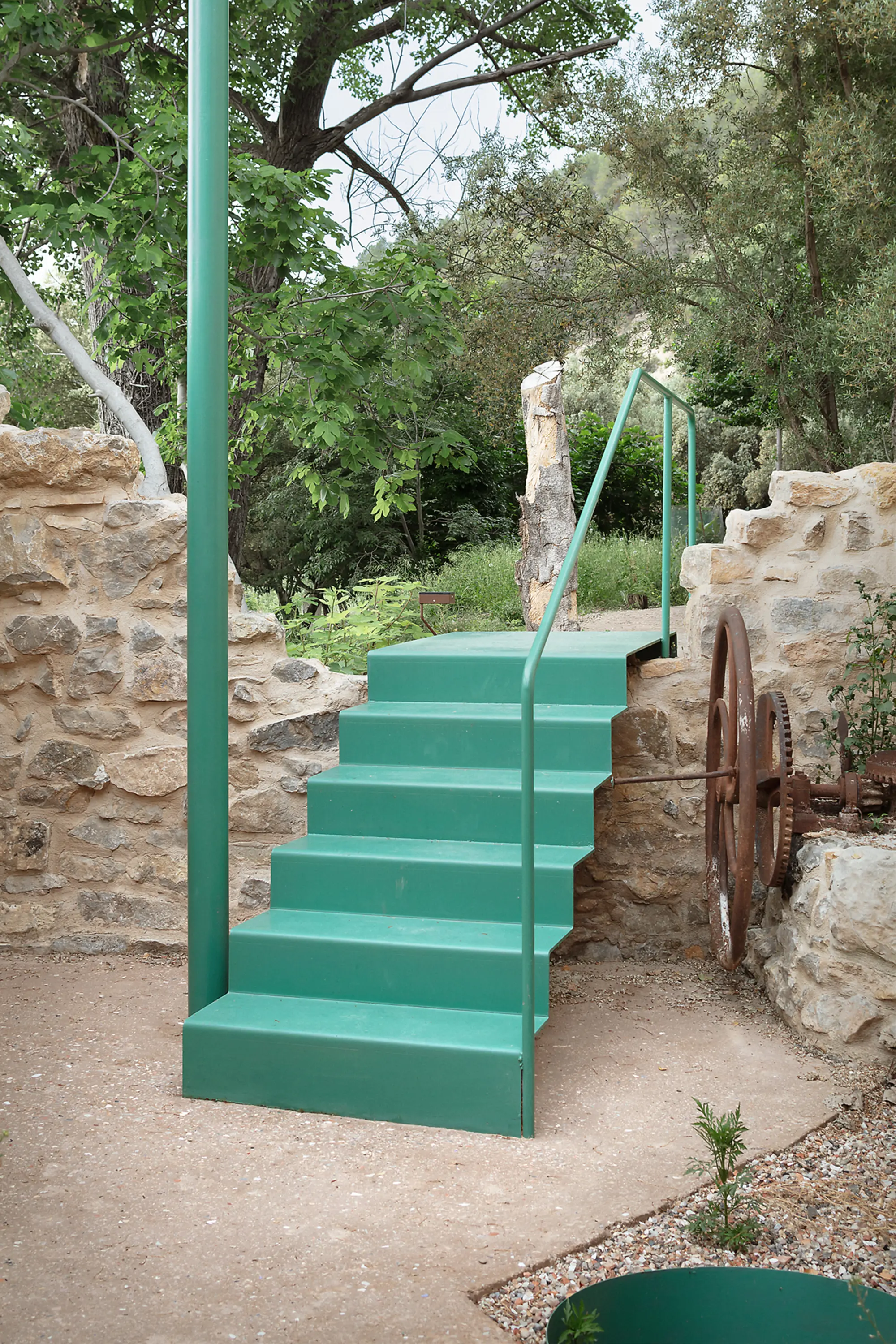
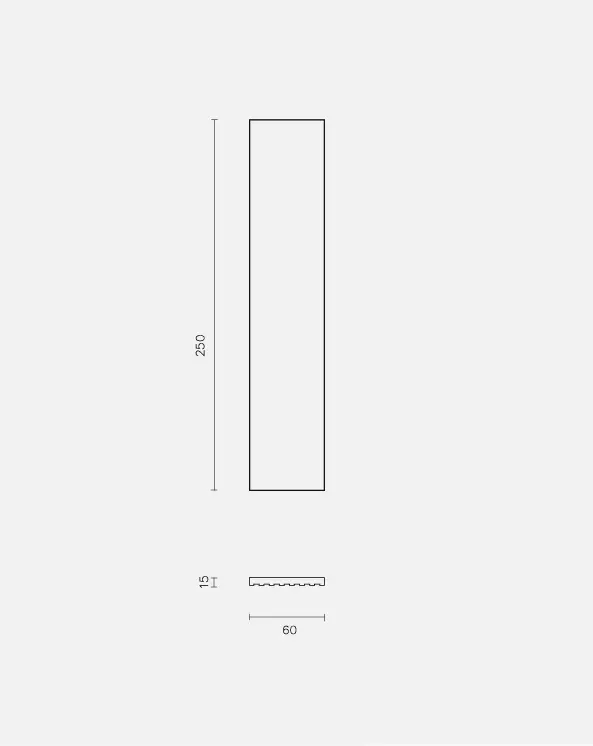
This space makes it possible to discover the elements associated with traditional olive oil production, including the millstone and the press, highlighting the olive mill’s value as part of the hamlet’s cultural heritage. Along the north façade, a continuous ceramic-clad bench provides a place to rest and meet, overlooking the surrounding landscape. A small staircase resolves the difference in level between the interior of the former building and the outdoor space.
At the end of the route, before rejoining the path that runs through the hamlet, a cantilevered beam attached to one of the walls supports a rope for climbing and jumping into the water. The element revives an existing recreational practice: a rope once hung from the branches nearby and was used to swing into the pool. In this way, the intervention incorporates established recreational uses into the regeneration of the site, maintaining the connection between the landscape, collective memory and everyday life in La Artejuela.